Beat Diaspora: Beats, Buses, Bricks

an omnivorous take on music of the beat-based variety and the urban spaces that nurture it

Friday, June 27, 2008

Imitation is the Most Illegal Form of Flattery

Disco isn't dead, thankfully, and I've been a long-time admirer of the DFA camp, especially el jefe James Murphy, for maintaining a disco sensibility that includes a deep reverence for the classics. While LCD Soundsystem is viewed as relentlessly contemporary and trendsetting, Murphy's DJ sets and pure compositional work betray a sense of lineage -- he isn't breaking new ground so much as updating and readapting it in another musical generation.

DFA often straddles the line between excessive commercialism and the underground music scene, however, and I downloaded up 2006's 45:33 with some trepidation. First EMI, now Nike? I'm rather fond of the often dreamlike, spaced-out epic, however, and honestly thought it didn't sound much like running music.

I'm late to the scoop, but it turns out I was right: The whole business about a jogging soundtrack was a sham. As the cover, which I hadn't seen before, makes clear, it's an homage to Manuel Göttsching's E2-E4, one of the finest proto-techno electronic compositions.


Having Nike finance your otherwise not commercially viable 45-minute electronic opus? Brilliant.

The story could end there, but the problem is that the reverence toward Herr Göttsching was not entirely appreciated. I dug up this press statement on the interwebs. After going on about the iconic status of "E2-E4," it paints Murphy as a johnny-come-lately:
This clearly doesn’t qualify his album as a tribute to the great role model.
He's just jumped on someone else's gravy train without buying a ticket.
What Murphy is doing is exploiting the album's reputation for his own purposes illegally
in the context of German Competition Regulations and also according to legislation of other countries, too.

Sadly, it boils down to a bristling about copyright infringement and the branding of the chessboard image. I happen to take Murphy's side in this one -- the world needs more, not less, E2-E4/45:33-esque études. Instead, it's another public case of an electronic auteur uncomfortable with the dance music progeny his work has spawned.
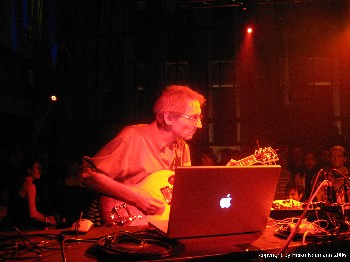
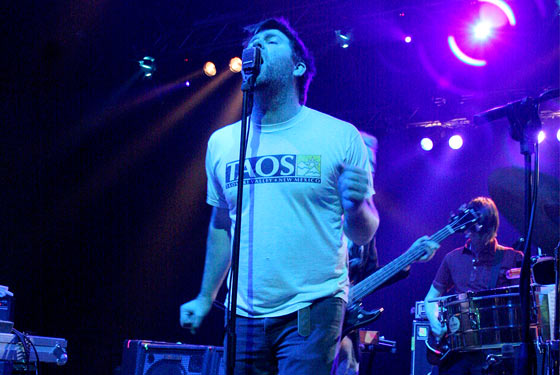

And frankly I'd much rather hear Murphy behind the mixing board than in front of the microphone. DFA has been experiencing a resurgence in the last year or so, as always on the strength of its tireless dedication to the 12" single, releasing dance floor favorites like Holy Ghost!'s smooth plaintive "Hold On", Juan Maclean's blissful "Happy House", and now a full-length from the mythologically-inspired Hercules & Love Affair (whose full-length dropped a few days ago on June 24, my birthday). They've gotten some high-profile press, and I think might represent a sea change for DFA. As Tim Goldsworthy explains in the article, "'It’s really honest,' Mr. Goldsworthy said in a phone interview, pointing out that most artists in the DFA world approach disco from more of a punk or new-wave sensibility. He said that, as a club kid, Mr. Butler 'understands disco and he understands all the little quirks of the music that other people would probably find cheesy.'" After years of mining the points in the late '70s and '80s when rock bands encroached on disco territory, they've finally acquired a flagship act who's loud and proud -- gay, campy disco with no shame, producing glorious diva house without a trace of irony. It might be just the tonic to pull DFA out of the post-ironic/hipster milieu and firm up their dance chops. Play another record, James.

Labels: , , , ,

Monday, December 04, 2006

Saturday Night Fever


Obviously been lackluster on the blog front, but I'll try and get out a few small items before endlessly delaying the big stuff (the rest of Rio, I Love Techno, other Parisian happenings).

Saturday a week ago found me at Paris's newest and biggest (an anecdotal claim, but trust me most clubs here are tiny) night spot: Showcase, creatively situated in an old sewer duct under Pont Alexandre III. Watch the virtual tour for a stylized take, but be warned it doesn't show, for example, how water (I hope not of the sewer variety) still drips down the walls and onto you, if you're not careful.

The video's soundtrack -- is that Lenny Kravitz?! (L'As du Falafel notwithstanding) -- I assure you, has nothing to do with what they play regularly, or at least what I came for. Rather, DFA maestro James Murphy (downloading frenzy commence: OTD claims the new album by LCD Soundsystem leaked today, although I haven't turned up paydirt yet).

While LCD Soundsystem has had a considerable run so far as either everyone's favorite object of hipster scorn or champion of post-ironic musical synthesis, James Murphy's DJ prowess is less known stateside (even if his music collection is a matter of public record). My best exposure to it was via Tim Sweeney's unparalleled Beats in Space radio show on WNYU, a latter-day incarnation of the Midnight Funk Association that blends a treasure trove of new & used techno, house, disco, and The Holy Mountain samples (cf September 26's broadcast).

James Murphy - Beats in Space, April 11, 2006

His label's remixes have been celebrated for bringing the neo-disco heat of the last few years, as the Pitchfork review of DFA Remixes: Chapter 1 eloquently elaborates. Ever since the summer I've stopped checking Pitchfork with any regularity, but I recall this review from last spring for its engaging analysis of the extended (re)mix: "The 'song' remains as a corporeal latticework, holding everything together with personable charisma, while the 'track' elements (riffs, beats, noisy eruptions) are marshalled into elaborately staged configurations [. . .] At their expansive best, the DFA's remixes can resemble gleaming, lavishly detailed architectural structures."

It's a logic that was clearly at work in his DJ mix at Showcase, where he quickly salvaged a night that would have otherwise been ruined by an awful Matisyahu-esque opener. It was well after sundown, so he wasn't violating the Sabbath rules, but DJ Tevya (I'm Jewish, I can make these jokes) made me wish it were Friday night. There was nothing wrong with his selection of old-school R&B and soul tracks -- even if they were CDs and not 7"s -- but his habit of abusing the CD-J and "scratching" without any rhyme or reason (or rhythm) was aurally abusive. Neither his drastic fiddling with the volume nor his pièce de résistance, a "scratch"-filled "99 Problems" with lots of gratuitous dancing on his part, helped matters. I was ashamed that he was sporting a BoSox cap.

Luckily Murphy's lush disco saved the day with several hours of synthesized strings, groovy bass, and diva vocals. While he can obviously crate dig far better than I ever will, I did recognize a few songs, albeit c/o Mr. Sweeney and his aforementioned radio show, so I'm afraid I don't have any track names to share.

One observation I can make, however, is how clear at times the lines are between his cache of disco gems and his post-2000 production work. Several times my ears perked up at the opening bars of a new track he was mixing in because it sounded like one of the DFA remixes. I've never been a Murphy detractor, but it was particularly gratifying to hear how his mind and ear have been at work these past few years, how closely he's listened to his old records and internalized their sound structure for his remixes. Far from the ephemeral trendsetter he may sometimes be deried as, there's a definite appreciation for the remix as artform that shows dutiful homage to his predecessors.

I remember hearing parallels most often to an early number, a slowed-down mix of the dance hit by electrofied riot grrrl faves (or has-beens, if you disapprove of major label jumps) Le Tigre.

Le Tigre - Deceptacon (DFA Remix)

When I first heard it a few years ago, my ear was still more attuned to the frenetic pacing of punk and thought this decelerated version sucked all the manic energy out of it. But attaching it to the durable musical legacy of disco has arguably given it more longevity -- elevating it above flash in the pan trend status ("discopunk", "dancepunk", "hipster[anything]", etc.) by adding it to the bibliography of dance music's long long arc in America.
___

A quick p.s. to Saturday Night Fever. While discussing disco as gay music with Luis, a much more dilligent blogger than I will ever be, he explained to me how Travolta's breakout was in many ways an attempt to masculinize and heterosexualize disco, paving the way for the social acceptability of endless "Disco Saturday Night" throwbacks of the same two dozen songs on commercial radio stations. This conversation coming, of course, after our own fantastic night of watching gay disco on the silver screen thanks to French blockbuster Poltergay.

And so almost three decades later, a disco popularization crosses the East River yet again, thankfully with less polyester and less of a conquering eye toward sexual politics. Groove on, DFA, groove on.

Labels: , ,