Sunday, January 27, 2008
Mediterranean Modernism

The other side of the Israeli urban equation from Jerusalem is its seaside counterpart: Tel Aviv, the image of Israeli modernity, cosmopolitanism, secularism, and according to some, political apathy. It is all of these, and more. The city was founded in 1909 on the beach just outside of Yaffo, an ancient port city, by secular Zionists looking for an ordered, gridded urbanism outside of Yaffo's dense chaos. Tel Aviv grew to swallow Yaffo (the city's official name is Tel Aviv-Yaffo), then sprouted skyscrapers, financial centers, Bauhaus and Art Deco architecture, museums, cafés, record stores, and now, nearly a century later, shows evidence of global city formation.

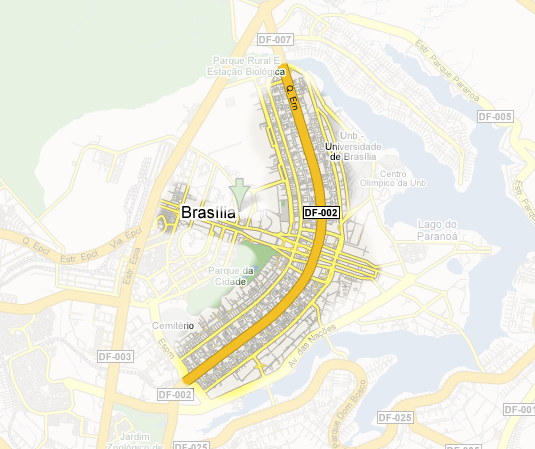
Airplanes -- that great symbol of modernity (Brasilia isn't shaped like one for nothing) -- fly over its Mediterranean shores heading for Ben-Gurion Airport, hub of El Al, the flagship Israeli carrier.


On Friday night while the Shabbat masses gather at the Western Wall, Tel Aviv's clubs are just heating up, while on the right block you'll find Hebrew stencil graffiti.

And the all-important rave flyer. Tel Aviv: hub of the Israeli psy-trance scene, one node on that vast global psy-trance network . . . global city indeed.
I didn't make it to one of the famed mesibot desert parties, and truthfully there was only a little trance at the club I did make it to, a friend's cousin's birthday party or some such affair. But it was bumping out of car windows and in the stalls at the market at the end of Shenkin Street.
Shulman - New Paradigm
Consider this the chill out room track, then. From Shulman's Soundscapes and Modern Tales.
__
I had too little time in Tel Aviv; it's hard to resist a Mediterranean city. But in the brief chance I did have, I found quite striking the duality between it and Jerusalem. One which I linked to the dichotomy between São Paulo and Rio de Janeiro. In what, as friends rightly pointed out, was probably the first time Jerusalem has ever been compared to Rio, I likened the axis Tel Aviv/São Paulo - Jerusalem/Rio. The basic distinction is between cosmopolitanism and particularism. The universal ease with which Tel Aviveans or Paulistas see themselves on a map with Milan, New York, London, Barcelona, Miami vs. the local customs, traditions, mores, dress that are hard to slip into. I love Rio, but I will probably always feel like an outsider, not the least because of skin tone. Likewise in Jerusalem, if you are not in liturgical rhythms, you will feel out of place. Both, too, engender more tourism, another distinction that separates you from the city. But people circulate into, out of, and within São Paulo and Tel Aviv on such a rapid basis that it's easy to slide in, hop on the metrô or go to the beach (and yes, Rio and Tel Aviv share a beach, but Rio's has its own rigid code where it's easy to feel like an outsider), and find that you don't stand out.
That kind of cosmopolitanism is seductive (and expensive -- I always spend more money in São Paulo and than I do in Rio; likewise a stroll down Shenkin cost me more before I knew it than any promenade in Jerusalem), but ultimately I try to resist it. There's a challenge in not being able to fit in, and an enjoyment that comes from enduring that regardless -- picking up the language, the music, whatever it takes to at least have an exchange, even if it would be 10x easier to become a carioca than a paulista, a Tel Avivean than a Jerusalemite.
At the same time, the cosmopolitanism of global cities brings with the interstices of culture -- gaps that allow for the constant innovation, creative use of space, and readaptation in cities like London, New York, and Berlin. Or Tel Aviv, as in DJ C's loft party. When I go back to Israel, I think I'll be spending more time by the sea.
Labels: cosmopolitanism, global city, israel, psytrance, tel aviv
Whose Jerusalem? Microglot & Polytical

Everyday life in Israel is micropolitical in a way that is unfathomable to me and must be extremely wearing for those who live there -- doubly so for residents of the West Bank and the Gaza Strip. Unsurprisingly, the Palestinian Territories were not on our itinerary, but flipping through a guide book I had the realization that, in fact, the Territories are not such a terra incognita. There's even a counter-Birthright to take you there. I try to avoid the polemics as best as I can, but crossing the green line will be an imperative for me whenever I can next make my way there.
It's embarrassing to admit that I had let news coverage so completely define my perception of the place. Ramallah to me was inextricably linked with Yassir Arafat's compound and that image had no place for say, these guys (many great links & mpfrees to be had), or the supposedly many hip bars with contemporary Arabic music. Arafat's compound, meanwhile, is a few miles outside of town. I should've known better: I'm originally from the D.C. area and I hate the assumption that everything "inside the Beltway" is the federal government (and not say, hip-hop/go-go fusion like my recent favorite W.A.L.E.).
In truth, I did visit the West Bank, to be precise the Jewish settlement of Gush Etzion. The whole place put me on edge, beginning with the History Channel-esque documentary in their "Gush Etzion Museum" of the history of Jewish settlement there and the battle that took place in 1948. At the end, the screen recedes and behind it lies the underground bunker where the last defenders of the kibbutz there were killed. The very fact that they need a master narrative to justify their presence made me inherently suspicious of the settlement's legitimacy, despite claims that it's not of the same ilk as more radical, most definitely illegal, settlements.
As if to underscore this difference, the largely American-born residents of Gush Etzion prefer to think of themselves as a suburb of Jerusalem, carving out a sense of normalcy precisely by painting it as suburbia, a disturbing slice of the Inland Empire in Israel. West Bank, CA.

12 minute drive to downtown Jerusalem aside, what kind of suburb is it if you have to pass through a checkpoint and along the infamous Wall? (How much is security fence and how much is wall I won't bother getting into here; on the Jerusalem-Gush Etzion byway [bypassing the Palestinian city of Bethlehem], it's a concrete wall, an attractive wall, but a wall all the same.)

Checkpoint at dusk from the bulletproof window of an armored bus.
Upon return to Jerusalem, lights across the city proudly proclaim the 40th anniversary of (re)unification.

Out of sight, out of mind?
Not exactly -- the division between (Jewish) West Jerusalem and (Arab) East Jerusalem along the fault line of the Old City has no pronounced borders or checkpoints, but it's the subtler linguistic distinctions that make me question the proclamation of unity. Polyglot Israel has three official languages: Hebrew, Arabic, and English. Official signage is very good about including all three.

In ultra-Orthodox West Jerusalem neighborhoods, Arabic is nowhere to be found (no photos out of respect for the community -- they did have large signs in every possible tourist's language asking visitors to dress modestly, not come in groups, and not take photos). Even just a few hundred yards into East Jerusalem, meanwhile, Hebrew script becomes noticeably scarcer. Especially on the buses: On the whole, West Jerusalem (Hebrew/Jewish) buses don't go to East Jerusalem, nor do East Jerusalem (Arabic/Muslim) buses go to West Jerusalem. Disappointing as it is, it's also endemic of the systematic discrimination against East Jerusalem neighborhoods in terms of municipal services. Yet 40 years of being one city has yielded substantial integration, whether friendly or not, and if a two-state solution means dividing East and West, it will require microsurgery indeed.

Even the incredible sensory overload of going to the market was, at times, fraught with reminders of ongoing tension.


How many articles have I read about olive trees destroyed, olive groves cut off by barriers, the bitter taste off the branch, sour in the mouth but so easy to swallow?


The police were watching all the entrances, a reminder of the very real terror of the Second Intafadah, when buying ingredients for Shabbat dinner (I took these photos in the Friday afternoon pre-Sabbath rush) was done at one's own peril. I suspect Arab residents, by choice or by dint of racial profiling, keep to their own market, but that doesn't mean they can't slip through under cover.

A stall selling all manner of religious, secular, Hebrew, Arab, Israeli, Egyptian, Lebanese, Moroccan, &more CDs was, to me, a triumph of the hot & polyglot multicultural stew that, at its best, the Middle East can be -- and that I believe Israel, as a democratic state, warts and all, fosters better than other nation-states (not that particular cities can't, at the local level, foster them -- Beirut, Cairo, Ramallah, Marrakesh).
The heavy strings in vintage Arab popular music accompany the lilting voice of a great chanteuse, like Egypt's Faiza Ahmed, extremely well. It was a joy to turn the dial on my trusty FM radio while in Jerusalem and come across the rich textures, the fantastic tonal interplay between voice and instrument.
Faiza Ahmed - Set El Habayeb (Al Oum)
All the more reason to learn Arabic and Hebrew for that matter.

Sunset over Har Herzl (Mount Herzl), home to the Israeli national military cemetery -- tombs of presidents, prime ministers, generals, famous Zionists (including Herzl himself), dead soldiers, innocent bystanders. Below this picture, I had just finished hearing the leader of our trip recount the death by suicide bombing of his fiancée in front of the memorial wall to victims of terror on which her name is inscribed.
There is no one side here.

Out of sight, out of mind?
Not exactly -- the division between (Jewish) West Jerusalem and (Arab) East Jerusalem along the fault line of the Old City has no pronounced borders or checkpoints, but it's the subtler linguistic distinctions that make me question the proclamation of unity. Polyglot Israel has three official languages: Hebrew, Arabic, and English. Official signage is very good about including all three.

In ultra-Orthodox West Jerusalem neighborhoods, Arabic is nowhere to be found (no photos out of respect for the community -- they did have large signs in every possible tourist's language asking visitors to dress modestly, not come in groups, and not take photos). Even just a few hundred yards into East Jerusalem, meanwhile, Hebrew script becomes noticeably scarcer. Especially on the buses: On the whole, West Jerusalem (Hebrew/Jewish) buses don't go to East Jerusalem, nor do East Jerusalem (Arabic/Muslim) buses go to West Jerusalem. Disappointing as it is, it's also endemic of the systematic discrimination against East Jerusalem neighborhoods in terms of municipal services. Yet 40 years of being one city has yielded substantial integration, whether friendly or not, and if a two-state solution means dividing East and West, it will require microsurgery indeed.

Even the incredible sensory overload of going to the market was, at times, fraught with reminders of ongoing tension.


How many articles have I read about olive trees destroyed, olive groves cut off by barriers, the bitter taste off the branch, sour in the mouth but so easy to swallow?


The police were watching all the entrances, a reminder of the very real terror of the Second Intafadah, when buying ingredients for Shabbat dinner (I took these photos in the Friday afternoon pre-Sabbath rush) was done at one's own peril. I suspect Arab residents, by choice or by dint of racial profiling, keep to their own market, but that doesn't mean they can't slip through under cover.

A stall selling all manner of religious, secular, Hebrew, Arab, Israeli, Egyptian, Lebanese, Moroccan, &more CDs was, to me, a triumph of the hot & polyglot multicultural stew that, at its best, the Middle East can be -- and that I believe Israel, as a democratic state, warts and all, fosters better than other nation-states (not that particular cities can't, at the local level, foster them -- Beirut, Cairo, Ramallah, Marrakesh).
The heavy strings in vintage Arab popular music accompany the lilting voice of a great chanteuse, like Egypt's Faiza Ahmed, extremely well. It was a joy to turn the dial on my trusty FM radio while in Jerusalem and come across the rich textures, the fantastic tonal interplay between voice and instrument.
Faiza Ahmed - Set El Habayeb (Al Oum)
All the more reason to learn Arabic and Hebrew for that matter.

Sunset over Har Herzl (Mount Herzl), home to the Israeli national military cemetery -- tombs of presidents, prime ministers, generals, famous Zionists (including Herzl himself), dead soldiers, innocent bystanders. Below this picture, I had just finished hearing the leader of our trip recount the death by suicide bombing of his fiancée in front of the memorial wall to victims of terror on which her name is inscribed.
There is no one side here.
Labels: arabic, arabic pop, hebrew, israel, jerusalem, politix, polyglot
Saturday, January 26, 2008
Zion ina . . . Zion

Much too much delay, but my trip to Israel merits comment all the same. Some might be affiliated with the vast cottage industry of Taglit-Birthright, whose main goal, according to friends who have gone, is to convince you to make aliyah (right of return -- instant Israeli citizenship for all Jews worldwide). I had the fortune of attending a similar (in the sense of free) trip, that thankfully wasn't so ideologically driven. The politics are inescapable and I want to get to them, but first I need to share some of my Mesopatamian soundtrack.
Hip-hop may get the lionzion's share of the credit for having gone global, but it's (older) brother-from-another-mother has definitely gone a global too. It was not too much of a surprise, then, to find Jewish reggae that decidedly isn't black-Jew-face. Instead, they had the imprimatur of Sabbo Ronen of the Soulico Crew (check out their mix of Israeli party beats), who happened to be behind the counter of a record store I hit up in Tel Aviv -- and part of the same crew as DJ C's friend Itai, the one who hooked him up with B-more ina Jerusalem a few summers back, although I unfortunately didn't have the same opportunity given my tight schedule. Small, small beat-friendly world, it is.
Ex-Centric Sound System - Blessed Love (ft. Richi Bless)
"This one have African paws innit, this one have Nubian paws innit, this one comin at you from Israel! This one is straight from anywhere all over the world."

Eccentric, like Israelis gone a foreign? Ex-centric like Jamaica as point of reference, not that omphalos at the center of it all? Jerusalem Syndrome--Messiahs--Haile Selassie--Ethiopia--Operation Solomon?
Ex-Centric Sound System - Wildest Dub (Solomon's Dub)
"I will rise now, and go about the city in the streets, and in the broadways I will seek him whom my soul loveth: I sought him, but I found him not." (Song of Solomon, 3:2)
Sunday, December 30, 2007
En Route

Where do you want to go today?


Winter in Zion, and I don't mean that Zionistically . . . Israeli reggae and thoughts on this complicated corner of the Middle East when I return. Roots and routes intertwined indeed.
Labels: airports, israel, non-lieux, transportation