Bo knows / Cabide after the jump
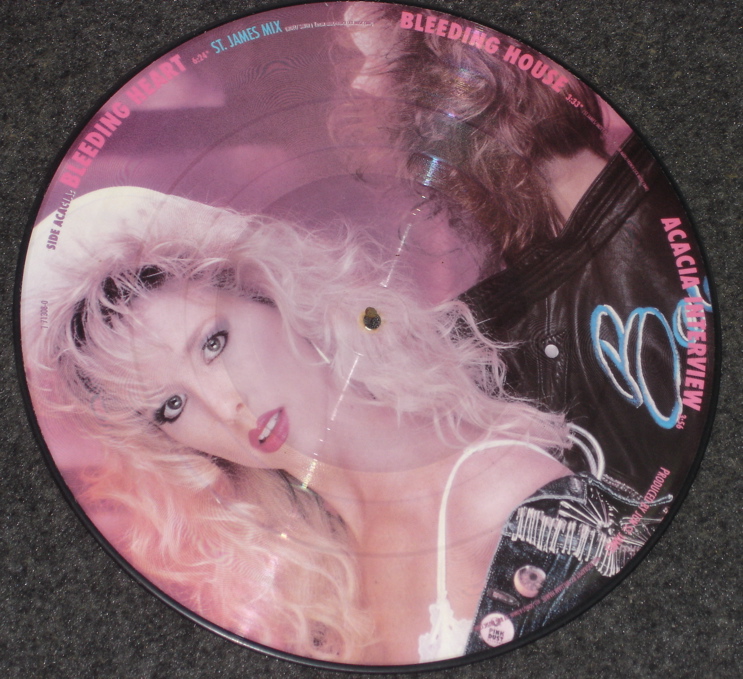
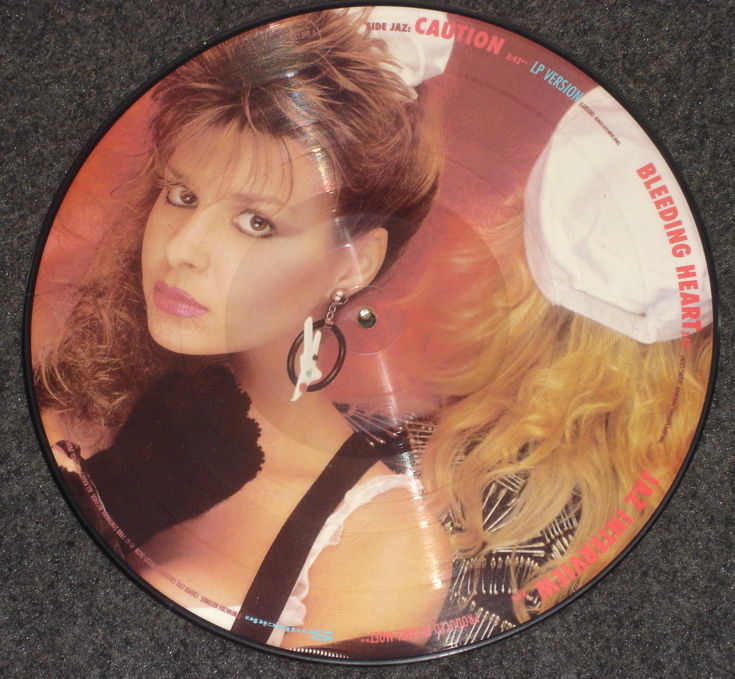
Catching up on some long-neglected RSS feeds and came across an insightful Maga Bo post. He uses mp3, YouTube, and his own observations on the Volt Mix to Tamborzão progression of rhythms (or more accurately riddims, given how they freely they float around) in funk.
Tamborzão Mix 2005
From Batidas Instrumentais Ineditas Vol. 5, a compilation of instrumentals for aspiring funk producers, that I copped at the Uruguiana market in Rio. The tamborzão (tambor = drum, ão = intesifer, so "big drum") will sound immediately familiar to anyone who's heard a fairly recent funk track. As Bo points out, "It's a big dry sound that works really well on a massive sound system in a mostly open air space. It's a mix that has lots of room for vocals and other elements. I would say it's as big and ubiquitous as sleng teng was in its heyday." As of summer 2006, DJs would ride the tamborzão beat through a whole set for easy mixing, and there certainly wasn't a lack of tracks to choose from if one stuck to it.
My man Cabide DJ (his site's down at the moment, but I'll tell him to fix it), who I interviewed over the summer, told me the the tamborzão was invented by Luciano DJ on a Roland-808. But as I've mentioned briefly, the dominant beat used to come from Miami bass, natch.
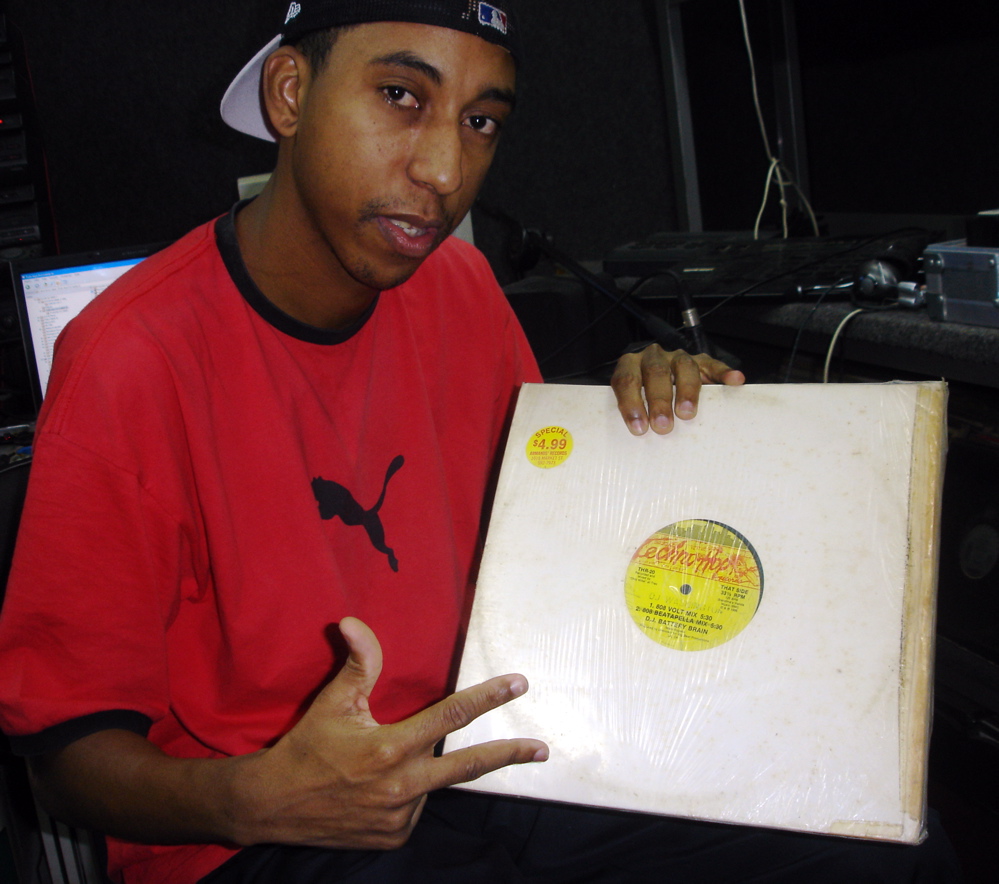 Cabide with record in hand.
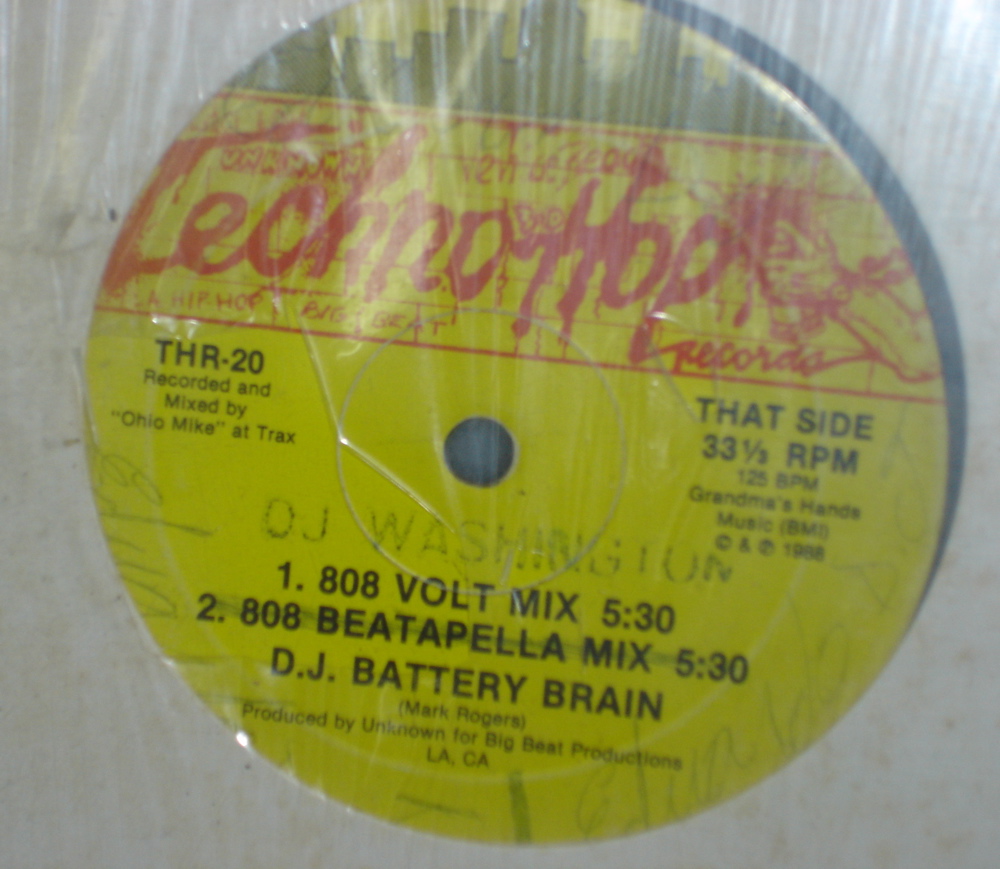 Zoom-in to the goods: 808 Volt Mix, DJ Battery Brain
What's that in the corner? Something to make the Philly heads flip. $4.99 went a long way. Too bad they're closing up shop.
___
Sany DJ holds up his copy in the YouTube vid (sorry, português only), but just to show that other old-school DJs had their hands on it too. Cabide said a friend picked it up for him in Miami. Miami --> Philly --> Miami --> Rio --> Philly over 18 years. Not a bad run.
The tamborzão mini-doc is also a hot demonstration of the live MPC DJ style that I found very prevalent in Rio. More from Cabide. First, as he says, "This here was the first sound used on a sampler in Rio, by MC G, with the Volt Mix beat."
Now some of his more contemporary stuff with a tamborzão flavor:
Cabide also claims to be the first DJ in Rio to use the Rocky Theme. He told me he bought a CD put out by O Globo (media corp) called "Sons do Cinéma" (Cinema Sounds). I tried to explain to him how the Rocky Theme has become synonymous with funk to Americans and Europeans, although getting into a detailed explanation of M.I.A. and pop stardom didn't really translate well. He was pleased that it had some popularity, suffice to say.
Something else dovetails nicely with all this discussion of rhythms and origins. I asked him how Rio DJs discovered Miami bass -- did folks go to Miami because they had heard about it, or when expat cariocas returned from abroad it came with them? He was stumped and called his friend MC Paul. While Paul didn't answer my more specific question, he sidestepped it to a broader point [audio in portuguese, translated & edited for clarity below]:
MC Paul on the origins of funk
"The beat of funk evolved in Africa. Africans began the beat, the drum beat, boom boom. Os americanos [in Portuguese, americanos refers to both North and South Americans collectively] brought this beat over and people made funk out of it. James Brown, hip-hop singers, they use the map of Africa because the beat comes from there, understand?"That puts it in a much deeper perspective -- you can call anything from James Brown to 2 Live Crew "American" without being wrong, but you can likewise point to a historical arc that goes all the way back to Africa. It brought certain sounds to the USA and to Brasil, so it shouldn't be surprising that they link up and recombine themselves a few centuries down the road.
All in all, it was a productive interview -- who knew I'd stumble over the Rocky Theme originator? Cabide's a really nice guy and a testament to the friendliness of Rio's music scene: I had bought his CD at Uruguiana market, liked some of the tracks, and wanted to know more. There was a phone number listed on the back so I called him, explained what I was doing, and we set a date a few days later where I could come out to his studio and do an interview. He's 31 years old and has been DJing since 1987 -- he was adamant that Marlboro doesn't deserve credit as the sole originator of the Miami bass-tinged sound. Several DJs, himself included, were doing the same thing back in the late '80s.
I don't have a good excuse for having sat on all this for so long, but here are a few more pics from that day:
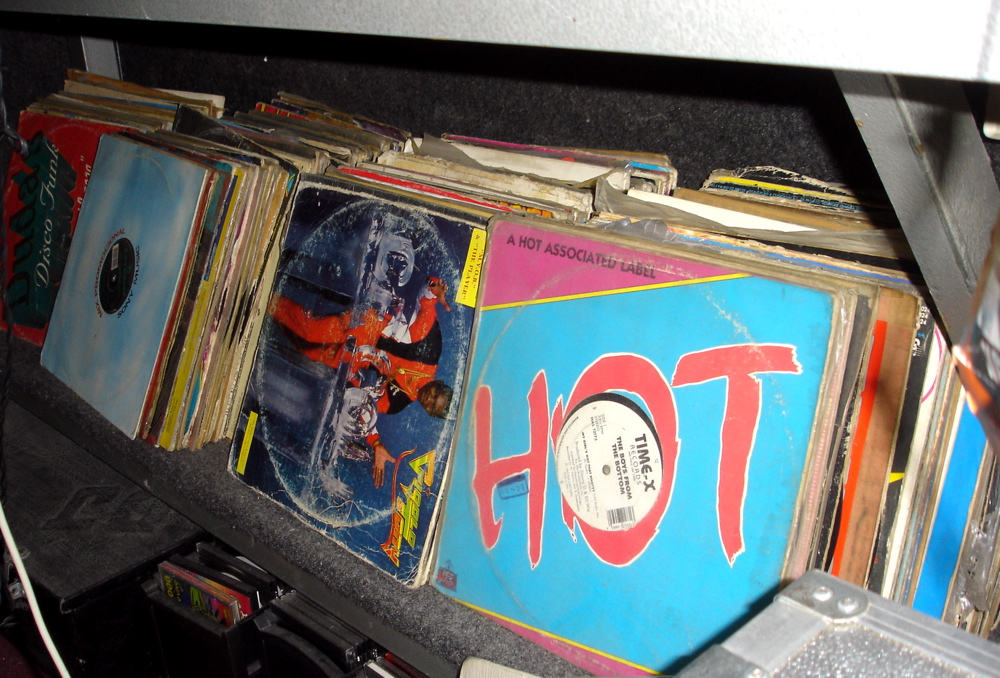 You know he's old school when he can crate dig.
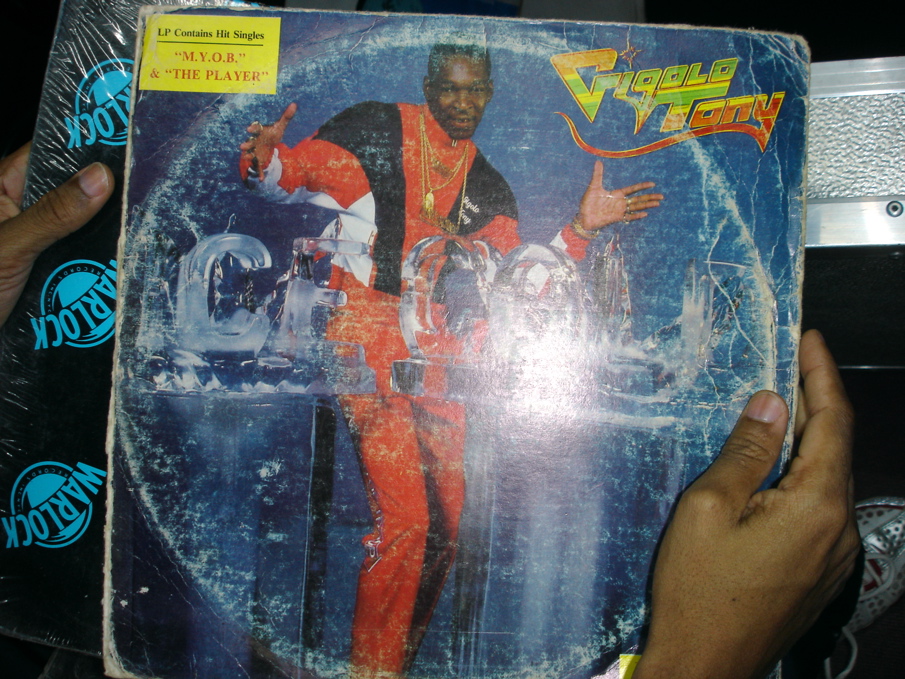 Another classic Miami bass artist who had a strong influence on funk.
 Cash Box was one of the earliest Rio soundsystems -- they even cut vinyl!
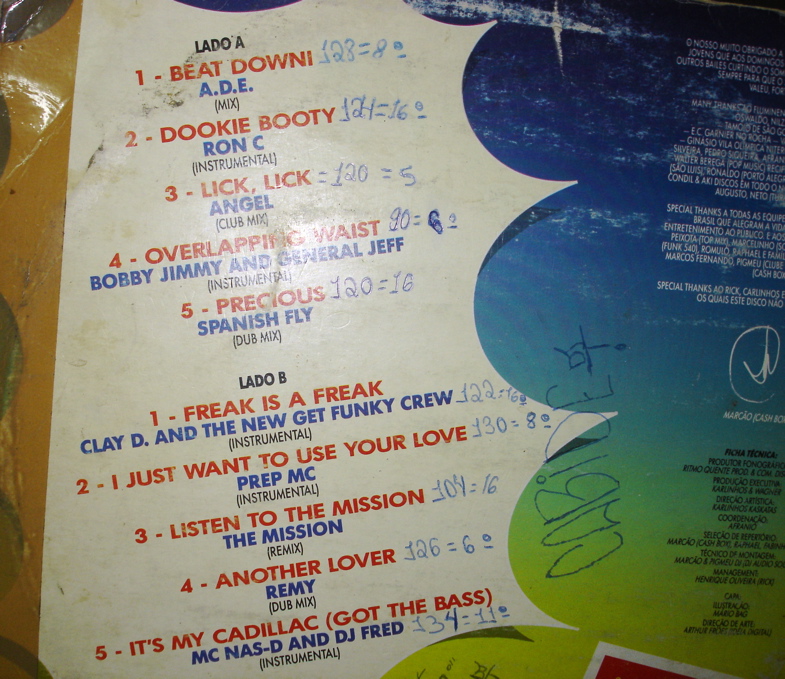 On the back: You can tell it's the pre-Portuguese vox days.
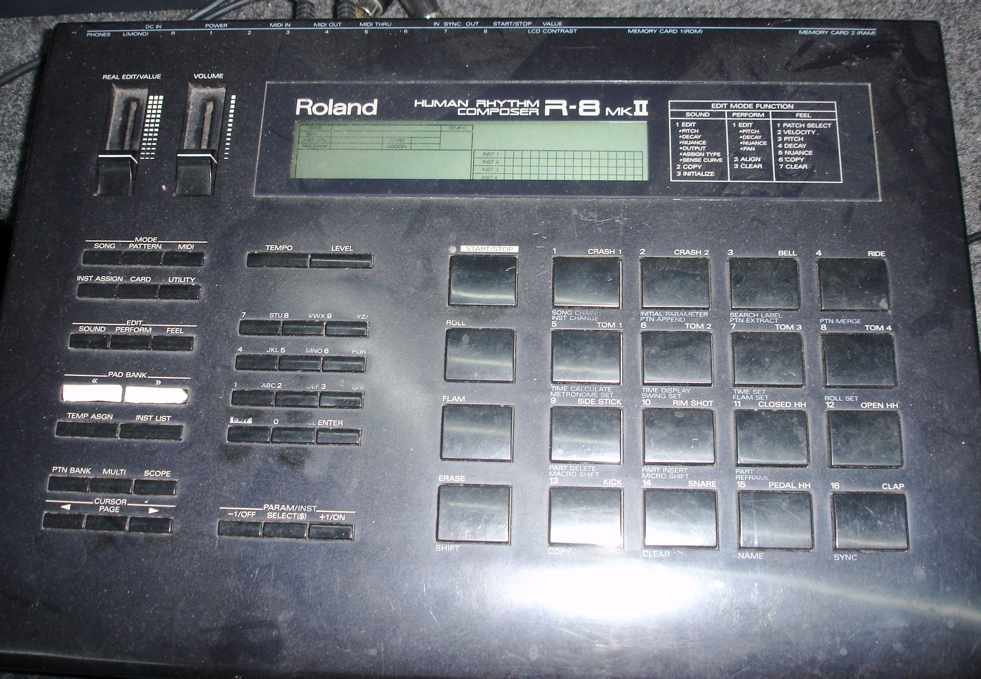 His studio was like an archaeology dig of music gear: from a Roland R-8 drum machine
to a Roland MC-50 sequencer
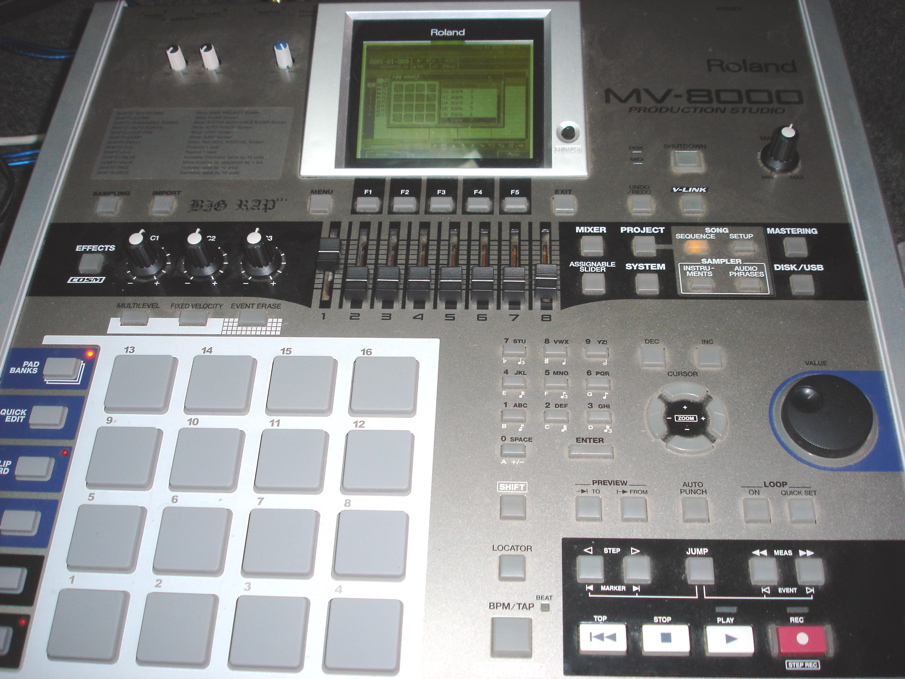 then moving to the present with his prized MV-8000 MPC
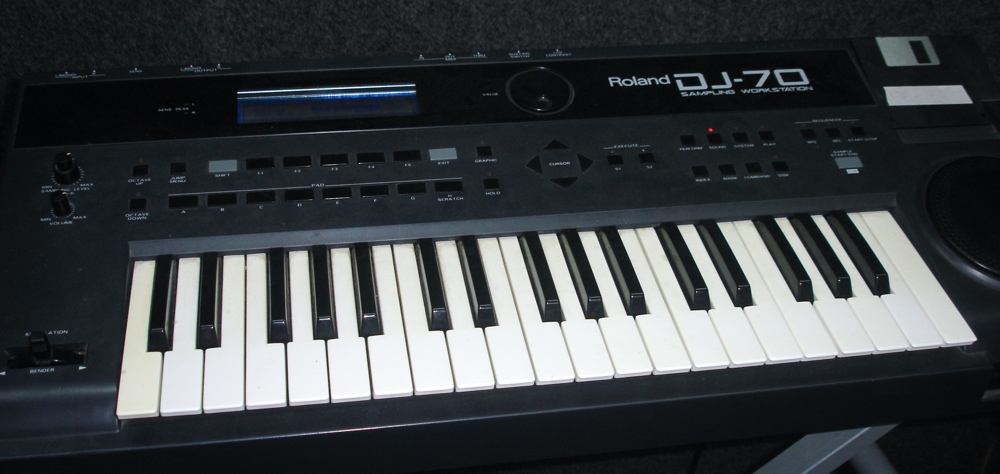 a less ancient keyboard
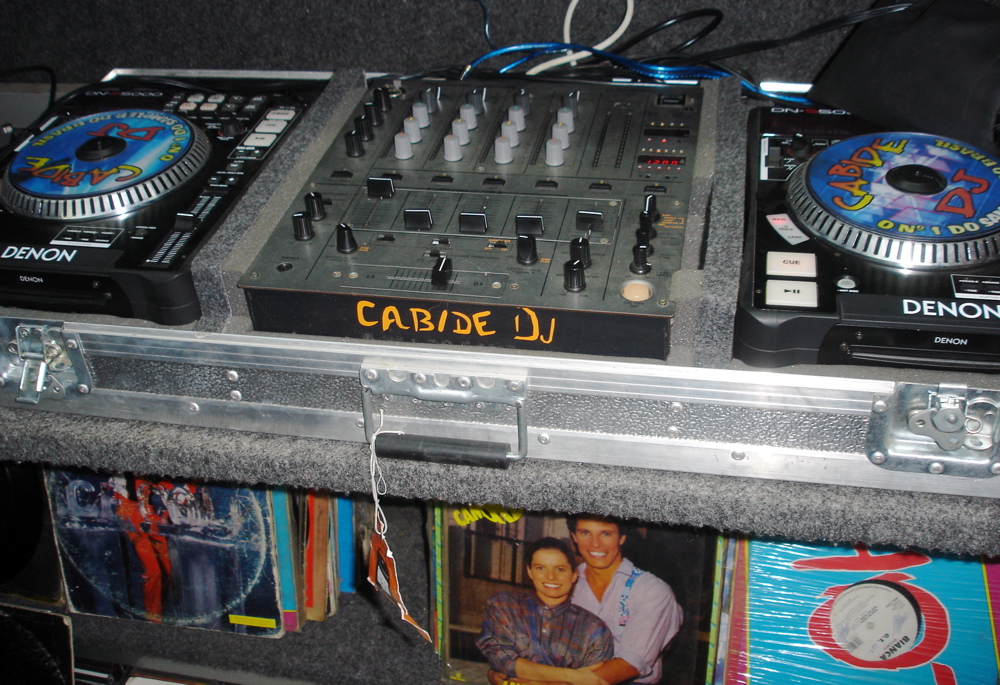 and his CD-J rig (he had turntables in a corner, if I recall).
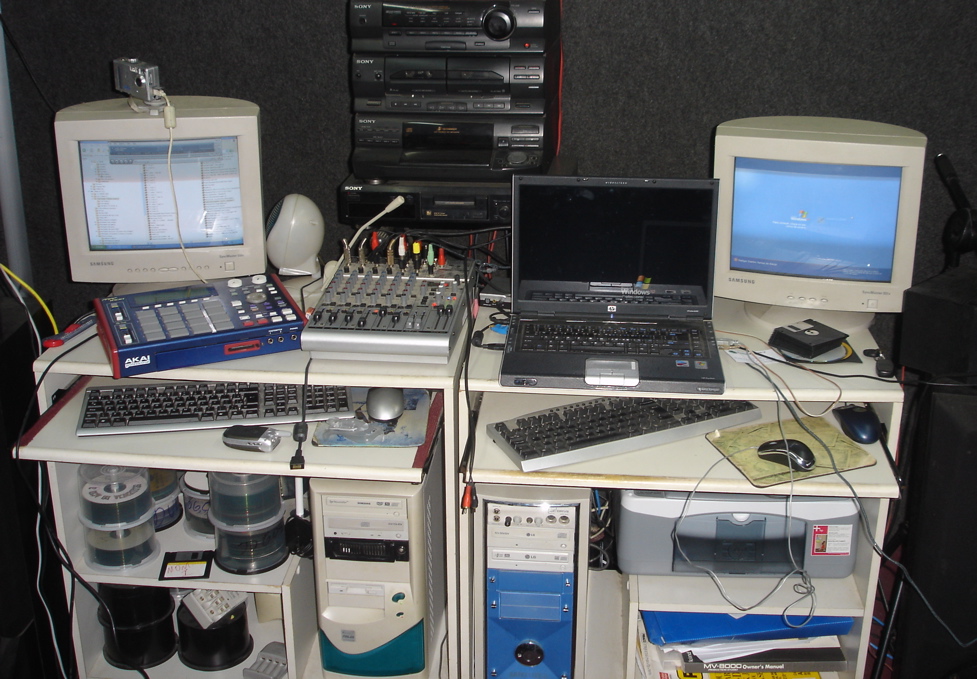 Plus of course the computer set-up
 from which he ran Sony ACID.
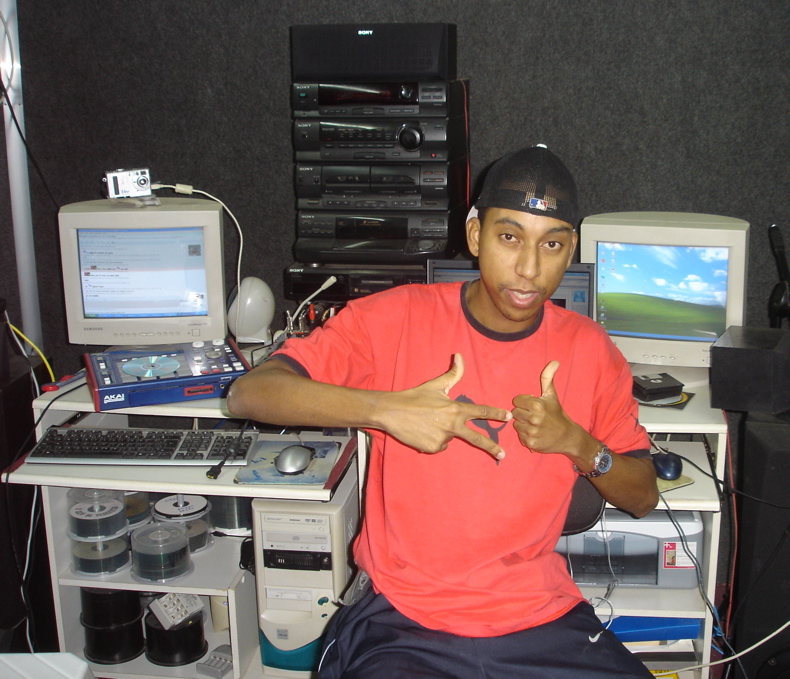 All in a soundproofed room, I might add.
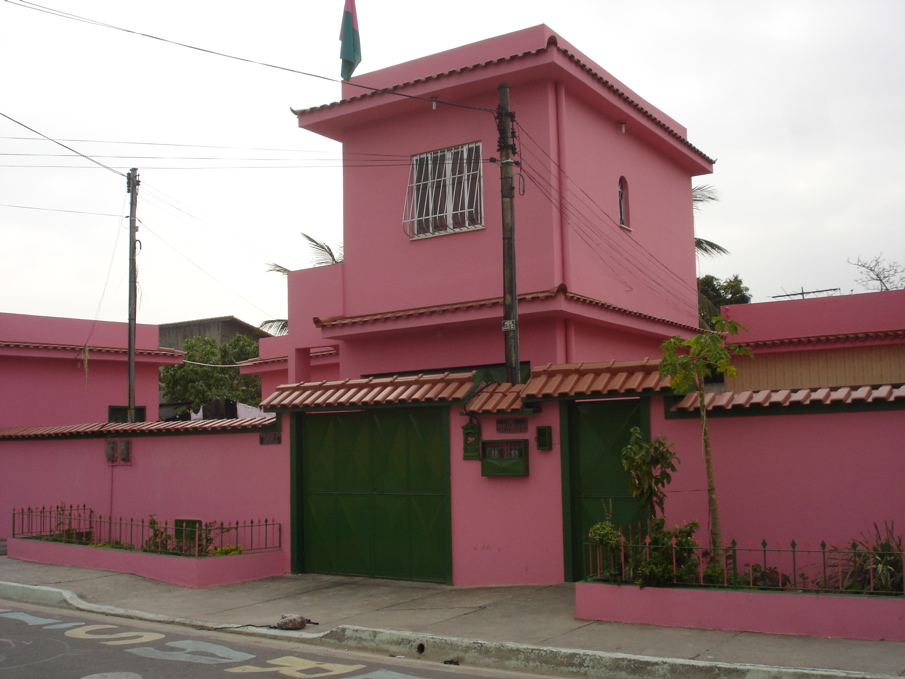 I thought the bright pink house was a nice touch -- it's actually a sort of complex with several houses surrounding a courtyard. There's space for that out in São Gonçalo, a suburb of Rio on the other side of the Baia de Guanabara (and over an enormous freaking bridge).
 And last but not least the wheels: a VW that's prized only second to his DJ gear.
Labels: blackatlantic, blogosphere, funk, gear, globalization, miamibass, rio
posted by gregzinho @ 11:48 AM
0 comments


