Beat Diaspora: Beats, Buses, Bricks

an omnivorous take on music of the beat-based variety and the urban spaces that nurture it

Friday, November 28, 2008

Tropa de Cultura


Even if it's old news in Brazil, I'm due to provide a refresher on Tropa de Elite (Elite Squad in English). It was directed by José Padilha as the second film in a trio that began with Bus 174, the documentary of a hostage taking on a Rio bus that was captured by national TV to disastrous results. His cinematic vision is to tackle the city's central pressing issues -- violent crime, the drug trade, police corruption and brutality. In Tropa de Elite, he focuses on the BOPE, Rio's equivalent of a SWAT team, that conducts intense operations in favelas -- usually with callous disregard for human life. Shoot first, ask questions later, as it were. Their ostentatiously violent symbol makes that abundantly clear ("It looks like a biker gang in the third reich.")

I first watched it in Rocinha with some 2Bros folks, where the scene portraying BOPE invasions of the favela were eerily similar to real life. We had a pirated copy that had leaked in August 2007, just a week or two before my departure. It had already spread like wildfire, and by the time of its official release in October, it was seen by a reported 11.5 million Brazilians. Not much the copyright police can do about that.

Most interestingly, it was equally popular among all strata of society, but for opposite reasons. Favelados were on the side of the victimized favelados as well as cavalier gangsters, and a friend of a friend was proud to have been an extra as a bandido. The middle and upper classes were taken by protagonist Capitão Nascimento, whose strongarm, torture tactics elicited applause in movie houses.

In a country whose moneyed interests frequently feel that the drug trade can only be reined in by extra-legal measures, Nascimento's take no prisoners attitude made him, as this magazine cover argues, a new national hero.

Padilha cannily rejects any claims that his film endorses either side of the debate. I saw him speak at the Harvard Film Archive last spring, where he maintained the position that the film was a portrayal designed to spark dialogue, not a polemic. In short, he's let the film be a mirror on its viewers' own prejudices and opinions about the power relations in Rio.

I don't think a strong-willed director tackling such challenging subjects should get off so easily. Surely there was some authorial intent. For one, the group that comes off the most negatively in the film are the wealthy college students who patronize the drug trade -- they provide the funds that keep the whole operation going, much to the detriment of folks who live just a few miles away up in the hills (on a longer scale, Colombia is taking the anti-cocaine message to middle-class Europeans).

Those folks, meanwhile, get their fair due of fun for a brief moment at the beginning of the film, with a stellar baile funk scene that tragically ends in a police-gang shootout. It's chopped up by the opening credits, as you can see in this trailer, but the shots come the closest I've seen on screen to a baile funk, or at least one c. 1997.


I say 1997 because that's the setting of the film, not too long after Rocinha brothers Júnior and Leonardo popularized one of the classics of funk carioca, "Rap das Armas," which they sing live in this opening scene. I documented a recent acapella usage and linktubed to a Yo! MTV Raps-esque version during my Rocinha sojourn. The popularity of "Rap das Armas" as the theme song to the film was a real turn of fortunes for Júnior and Leonardo, who I met around the same time in August 2007 just as they were preparing to tour Europe in advance of the film's release there. After skyrocketing to fame in the early '90s, they became increasingly impoverished until they were reduced to driving a taxi cab on 12-hour shifts each, so the car was constantly in rotation. Now they're back in the driver's seat, so to speak, as funk MCs.


This version is from the official Tropa de Elite soundtrack, which amazingly is on sale stateside, as is the DVD. It cycled around some film festivals in the U.S. this year, but I never saw it make much of a splash in wide release. I was convinced it would become the next City of God, a lush but violent film about Rio, set to further fix foreigners' minds that the city is a violent nightmare. I guess I was wrong. But if you don't want to shell out for the official copy, you can see it for yourself with English subtitles.

With such broad appeal, meanwhile, it was only a matter of time before edits/dubs/remixes trickled out of the Brazilian webosphere. In fact, to permit a cross-linguistic pun -- Tropa became a trope, its catch phrases and music trotted out in all manner of remix culture fashion. Below is a sampling of the samples --


  • Capitão Nascimento viciously berates his wife as his battles in the field increasingly rattle him. He created a new slang term, "Quem manda nessa porra sou eu" (I'm the one who controls this shit), that caught on rapidly, enough to become remixed as a funk track.


  • Brazilian humor site Kibe Loco has some video remixes cobbling together scenes from the film with tamborzão, crunchy guitar (and in the first, the riff from "Seven Nation Army"), and popular lines from the movie. The stutter-start chopped scenes actually recreate the funk vocal sampling technique with some accuracy.


Labels: , , , , , , , , , ,

Thursday, November 27, 2008

Força Kuduro!


Every time I leave from Rio, the gate next to mine is always the nightly Rio to Luanda flight on TAAG, the Angolan national airline. The idea of these two cities linked by a direct flight across the southern Atlantic when the airline industry is so dominated by hubs running through major financial or political capitals, especially in the Global North, is extremely alluring. A flight to the U.S. at one gate and Africa next to it also neatly sums up the split influences in Brazil, and especially Brazilian music like funk.

Take that six hour flight to Luanda and you'll be in the home of funk's brother from another mother, kuduro. As part of the ongoing effort to keep kuduro from flavor of the month status, Flamin Hotz teamed up with kuduro mediator Frédéric Galliano to produce another stellar 12" EP. I thought the art was stunning on Funkeiros e Progresso, but BustBright took it to the next level here.

Take a listen to DJ Tecas' "Bate o peito (com respeito)" -- beat your chest with respect!


Like it enough to get the whole EP? Compre aqui!

Labels: , , , , ,

Sunday, November 23, 2008

Mnml do Morro


Brasil still on my mind -- stripped down & sped up.

First, there was some percussive ferocity lingering in my inbox, c/o Daniel D'Errico. He plays in Boston's BatukAxé, a drum group led by Bahian Marcus Santos. Up above, they're playing at the "Welcoming New Bostonians" event, holding it down for the constant stream of Brazucas coming to the Bean. (Daniel is the odd one out in the yellow shirt.)

BatukAxé (Marcus Santos' Bateria) by gregzinho

Then wayne&wax tipped me off to Discobelle's most recent Mixin' It Up by DJ Downtown of Helsinki (what is it with the Finns?! tropical living vicariously through funk carioca?) The opening track is a stripped down version of "Rap das Armas", the ever controversial and ever misinterpreted telling-it-like-it-is funk track. This version sounds like the one re-recorded for Tropa de Elite, which I shamefully never blogged about, although you can read up on all the fuss from last year over at the now defunct BOPE Blog.

Labels: , , , , , ,

Saturday, November 22, 2008

Baile Rave


If it's not one of us, it's another. Following in the fine Finnish tradition of his countryman DJ Rideon, there's another funk carioca blogger (and 2Bros volunteer!) on the loose in Teemuk of Otra Luna, which focuses on "art, design, music and culture from the southern side of the world." His "super classics of funk carioca" series has dug deep this month, with big features on William e Duda and Deize Tigrona.

The latter has apparently gone mundial, collaborating with Lisbon's DJ Manaia for some cross-lusophone batidas.


"Eu sou sobrevivente de uma rave." (I'm the survivor of a rave.)

A tried-n-true funk MC singing over the raviest of rave synths can only make me laugh as I recall Sany DJ's complaint that his pós-baile funk is derided as "rave" at bailes funk.

What I don't understand about this track is why the vocals are so poorly recorded. They sound worse, in fact, than her smash hit "Injeção" (with a dance routine no less -- happy, Lone Wolf?) The raw sound of funk is constantly praised as one of its most endearing features, although that's really a canard w/r/t funk of the last decade or so, with the big commercial sound systems using top notch recording studios. Did DJ Manaia intentionally rough up the vocal mix to make it sound grittier, more like funk to his Portuguese or wider Euro audience? Either way, it just plain sounds bad against those hyper-polished synths. Maybe Deize is simply hoping her vocals survive this rave.

Labels: , , ,

Monday, November 17, 2008

Returns

O Cabidão caught an overnight flight to Rio on Saturday, rather gladly saying farewell to the U.S. and returning to "a minha terra, o meu Brasil!" Too cold, volume too low, clubs too small (and my basement not the nicest place to live either, granted). After three weeks as the ad-hoc tour manager of the first non-Marlboro DJ to play for American audiences, I now have a more realistic perspective on the viability of bridging the divide between global ghettotechnicians and their northern fans, at least in the case of funk carioca, really completing the circle from wide-eyed onlooker to direct intervener.

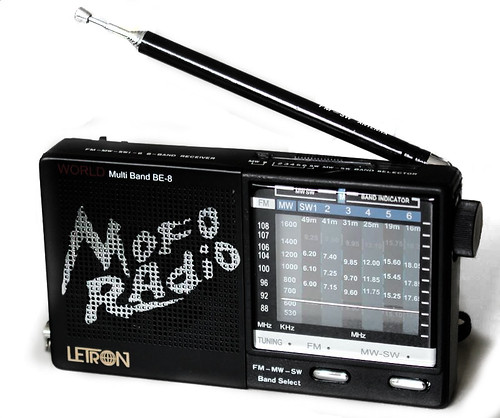
I don't want to declare the tour a failure. There were plenty of highlights: Global Frequency, MoFo Radio, Invasores do Baixo, Mudd Up!, TTL in-store, Batida do Funk. And the tour really brought out the best of some fine folks like wayne&wax, Lone Wolf, DJ Ghostdad, and DJ Comrade, all of whom put their time/money/effort/talent into collaborating. Kosta of Bananas even used his west coast contacts to score a show in Seattle on three days notice.

Still, a tour remains an economic proposition, and one that fell fairly flat. It seems that playing the Brazuca circuit (Hyannis, Newark, Bridgeport, Boston, etc.) pays for the plane ticket and is a prerequisite to being able to afford other shows for the knowing gringos. Unfortunately, this means Brazuca crowds will also be driving who gets brought up. Most are not carioca, but from other, poorer states in Brazil, and get their funkeiro fandom from the web, where heartthrobs like Mulher Melancia (the Watermelon Lady) are the top draw. Cabide, in fact, was a relative unknown, so he didn't bring out the Brazilians en masse in New England.

While this tour was a half-and-half proposition, in the future I expect funk DJs and MCs to mostly play for the brasileiros and then, if possible, an interested party like myself, the Boston Bouncers, Xão Productions, or Masala (who had expressed interest, but we had some visa issues) will cobble something together.

The "Batida do Funk" party by Xão at S.O.B.'s was, admittedly, my favorite of the tour. To trot out an old cliche, in the melting pot of New York we were able to find the mixture of gringos in the know, global music aficionados, and plain old Brazilians to make the show a real crossover audience. The addition of Brazilian dancers and a baile funk slideshow by Vincent Rosenblatt of Agência Olhares made for an odd refraction.


Dancers juxtaposed with the image of dancers. A baile funk americano (Cabide repeatedly referred to shows as "bailes") juxtaposed with a baile funk carioca. We were both interviewed for the upcoming film Beyond Ipanema, about Brazilian music in the U.S., whose directors were in the audience. I was unable to tell who was Brazilian and who was American. It's difficult math when a club that serves $10 caipirinhas can't pay the DJ as much as a favela in Rio can, but that's the strange inversion for you. Who mediates, who performs, who speaks (Cabide was mute without English and I was left to translate for film, radio, conversation). He opened for Diplo on the penultimate show of the Mad Decent tour, playing the first set even before some indie band from Brooklyn came on. The headliner later worked in a tamborzão, but he was temporally separated as much as possible from the real performer. Worried about being upstaged the next night, cutting the volume, sucking the life out of the music. Metaphor and fact. Who controls and who performs. The tours are over, but the film will linger.

Labels: , , , , , , ,

Friday, November 07, 2008

Nova Iorque

The other direction on I-95 tonight & tomorrow -- Cabide DJ live in-store at Turntable Lab and then a Saturday midnight show at S.O.B.'s.


Labels: , ,

Wednesday, November 05, 2008

Hudson Airwaves

Yes we did. (Now here's what the rappers have to say about it.) And on that musical note, can't stop won't stop w/r/t Cabide DJ's tour. He was sending international chirps all night to Brazil about Obama, now he'll be crashing the NYC airwaves today for some more MPC-banging beats.

First up: The Big Cover Up with $mall ¢hange on East Village Radio (interwebs only) from 4-5 pm with the lovely Zuzuka Poderosa translating.


Then he'll cross the Hudson for an appearance on Mudd Up, the show hosted by DJ /rupture on venerable freeform station WFMU from 7-8 pm. 91.1 FM on your Nova Iorque radio dial or ao vivo online.

Labels: , ,

Wednesday, October 29, 2008

Cabide Tour Update

Update: The shows in Framingham (Old Station Steakhouse) and Bridgeport, CT are canceled. The rest of the tour is for the non-Brazuca crowd as follows:

10/30 Philadelphia, PA - Medusa w/ DJ Gregzinho, Chip and Becky Soundsystem
11/03 Philadelphia, PA - "Jang House" at The Barbary
11/06 Baltimore, MD - "Bananas" at Bedrock w/ Donkey Bits
11/08 New York, NY - "Batida do Funk" at S.O.B.'s w/ DJ Comrade, MC Zuzuka Poderosa, Supervixen
11/13 Baltimore, MD - Sonar w/Diplo, Boy 8-Bit, Blaqstarr

First show in Philly is coming up fast . . .


And parabéns to Lone Wolf for putting together um ótimo vidéo of Cabide at WMBR.

Labels: , , , ,

Monday, October 27, 2008

Blue Monday


Asian markets tumble to historic lows? The blues still got a stranglehold on the Dow? DJ-cum-financial guru Balagan has the solution: Bear Market Beats.


It's going to be a Red Tuesday tomorrow, however, once the Phils put it away tonight. And for full coverage of Cabide DJ in Philadelphia, check Philly's finest nightlife/music/art/fashion blog, FiftyOne:FiftyOne. What it do, indeed. It begins tomorrow with a 1-3 pm appearance on WKDU's Rhythms N' Time.

Labels: , , , , , ,

Wednesday, October 22, 2008

Try Try Again


There's Cabide DJ holding a copy of the Volt Mix along with one of DJ Ghostdad's old school funk records. Ghostdad is in the background prepping for tonight's appearance on MoFo Radio -- tune in on WZBC 90.3 FM from 10 pm to 1 am.

Cabide is going to talk about the transition from Miami bass to funk, with plenty of vinyl examples. He dragged a suitcase full of records onto the plane, so expect a serious history lesson, with the Miami bass originals followed by the Rio tracks that sampled them.

On the sample tip, I noticed something that Cabide has in common with Euro-African collabo The Very Best. Check out this longie-but-goodie from 2006, an extended montage of "Comunidades," basically a roll call of favelas from across Rio.


Now compare with The Very Best's "Sister Betina," one of the slower jams on this hyped up (but unmixed) mixtape.


Both sampled & sped up (although a higher bpm on Cabide's tune) Aaliyah's smash hit "Try Again."


Curious, although I (mostly) doubt direct inspiration. Timbaland's beats are fertile for all.

Labels: , , , ,

Tuesday, October 21, 2008

JP Party Line


You heard the man. Call now!

And tune in tonight for Cabide DJ on air from 7-8 pm: WMBR 88.1 FM in greater Boston or streaming live on the web

Tomorrow night, MoFo Radio from 10 pm - 1 am: WZBC 90.3 FM in greater Boston or again live sobre o Internet

Labels: , , ,

Sunday, October 19, 2008

Cabide DJ Landing Stateside


Pancadão do Morro was just the first step in establishing better international connections between funkeiros brasileiros and americanos. Now, we've got one of the best DJs from the record on U.S. tour. Funk originator Cabide DJ, who I blogged about way back in '06, touched down the day before yesterday and made it through customs & immigration with no problems (graças a deus).

Cabide is not the first DJ or MC from Rio to come up. In fact, the Brazilian expat organizing the tour had MC Biju (who did "Aviãozinho," which appears on Favela on Blast) and Mulher Melancia (an ex-dancer of MC Créu who launched her own career on the strength of a bestselling Playboy Brazil appearance) playing shows here just last month. The catch is that they only play for the Brazilian immigrant community, covering the east coast Brazuca circuit of Boston, Framingham, Hyannis, Danbury, Bridgeport, and Newark.

Fortunately, I got wind of this tour ahead of time, and I'm proud to announce that the forbidding world of international travel worked out and for the first time -- excluding DJ Marlboro, who has always been in a league of his own anyway -- a funk artist is going to perform for crossover crowds, and ideally beginning to bridge that gap between global ghettotechnicians and their not-so-ghettoized fans in the global norte.


There's the man at work in Rio. Now let's see what he an do to the East Coast, where he already played Club Lido in Revere on Friday night, Made in Brazil in Queens last night, and Tuxedo Junction in Danbury, CT tonight. Check XLR8R for a tour-opening boost as well as an mp3 exclusivo.

He follows with Global Frequencies on WMBR this Tuesday, Mofo Radio on Wednesday at WZBC, and then an Invasores do Baixo massive on Thursday with an excellent cast of local characters.


Full tour schedule below, but I'll be making regular updates with flyers for the shows that I organized.

10/17 Boston, MA - Club Lido
10/18 Queens, NY - Made in Brazil
10/19 Danbury, CT - Tuxedo Junction
10/23 Boston, MA - "Bass Invaders" at Milky Way w/ DJ Ghostdad, Nick Yoder, DJ Gregzinho, Philomena, wayne&wax, DJ Flack
10/25 Hyannis, MA - Pufferbellies
10/26 Boston, MA - Taboo
10/30 Philadelphia, PA - Medusa w/ DJ Gregzinho, Chip and Becky Soundsystem
11/03 Philadelphia, PA - "Jang House" at The Barbary
11/06 Baltimore, MD - "Bananas" at Bedrock w/ Donkey Bits
11/08 New York, NY - "Batida do Funk" at S.O.B.'s w/ DJ Comrade, MC Zuzuka Poderosa, Supervixen
11/13 Baltimore, MD - Sonar w/Diplo, Boy 8-Bit, Blaqstarr

Labels: , , , , , ,

Wednesday, July 09, 2008

DJ Showcase Latinoamericano


This week is the Latin Alternative Music Confernece in el Manzana Grande. As part of it, global music purveyor S.O.B.'s is hosting a DJ showcase of Latin America's musica digital-bass-club-mashup on Thursday night. I'll be holding it down for the Brazilianists with plenty of funk and hip-hop brasileiro, but the rest are a strictly castellano affair -- Mexico, Chile, and Argentina.

The Zizek boys and their cumbia digital should be a big draw, especially on the heels of their monster write-up in Urb. Toy Selectah also has been mining the urban/rural frontiers for many years now and has hopefully cooked up something special for the evening.

Meanwhile, Refusenik and I keep wondering how a couple of white Jews of Eastern European descent (or birth, in his case) ended up on the bill . . . until I discovered my secret identity c/o TimeOut New York. Apparently I'm now from Sao Paulo! All the reason to rep Rio even harder.

In all seriousness, I understand it's going to be the party of LAMC, so if you're in Nova/Nueva York, stop on by.

DJ Showcase Latinoamericano
S.O.B.'s at 204 Varick St.
$10, 21+
Doors at 8:30 pm, show at 9:30 pm

Labels: , , , ,

Tuesday, June 17, 2008

Ela gostou de baile funk


Casi from Flamin Hotz directed me last night to the Mad Decent blog, where with tremendous surprise and utter shock I learned that Adriana Pittigliani has passed away. I hadn't the faintest idea that she had cancer, as admittedly we haven't spoken much since last August, following a dispute about a DJ gig and disagreements over the Flamin Hotz CD. These arguments seem petty now, and in fact I had recently written her a letter to accompany her copy of the CD, in hopes that it would serve as a springboard to patch things up. She was one of the examples of how the transition from wide-eyed researcher and inquisitor to representative of a record label, however small and independent, unfortunately compromised social relationships. But I still recall with clarity the long discussions in her Flamengo apartment, overlooking Pão de Açúcar, where she chain smoked cigarettes and held something of a funk carioca salon. Adriana was one of the first points of contact for any foreigner coming to Rio with an interest in funk, from Diplo to Daniel Haaksman, British party promoters, Swedish journalists, Québécois radio DJs, or someone with an academic inquiry like myself.

As a middle-class white woman, she seemed a strange fit for a relentlessly young and predominately black scene built from the ground-up in favelas far from the tony high-rises of Flamengo. But I think her attraction began, in part, with her photographer's eye. (Her site no longer works, but if you get the Flamin Hotz CD, you can see her excellent work on the Carioca Funk Clube artist photos.) The movimento funk is a whirlwind of humanity at its most exuberant, and certainly she must have been drawn to photographic compositions rich with sweat and bodies, color and movement. She had a feminist tilt to her experience as a funkeira as well, and she frequently recounted a transformative experience back in 2004 in Vila Mimosa, the red light district of Rio, throwing a baile with a group of prostitutes -- not to drum up clients, just to enjoy. She saw something parallel in attitudes and mores, a thumbing of the nose at decency, in Vila Mimosa and the favelas where bailes are king.

Moving from grande dame of funk, making connections between foreigners and high-profile local DJs and MCs, to the manager of a "house of artists" (Casi's words) in Carioca Funk Clube, chief among them DJ Sany Pitbull, I kept wondering why Adriana dedicated so much time and energy to putting together tours, sending out promo tracks, and scouring the web (her imprint was everywhere -- MySpace, blogs, Wiki) to relentlessly promote CFC -- sometimes, in my opinion, at the expense of the movimento funk as a whole, which I began to think she didn't have a whole lot of respect for. Regardless of my personal gripes, she was decidedly on a mission, and certainly was promoting something new and exciting. It was not for nothing that Hermano Vianna, veritable written authority on funk (cf O Mundo Funk Carioca, c. 1988), called Sany's "Funk Alemão," and by extension the CFC aesthetic, "pós-baile funk."

Adriana's goal, I eventually realized, was to "break" funk the way that her father, Armando Pittigliani, had in part "broken" bossa nova. According to the Cravo Albin Dictionary of Brazilian Popular Music, he "was one of the ones responsible for the first releases by several bossa nova artists." I can't prove it, but I believe the royalties from those early albums, or at least his success as an A&R guy in the Brazilian music industry over the decades, in part allowed Adriana to have such a nice apartment in Flamengo without holding down a steady, full-time job (not that she didn't, I'm sure, earn her own keep from photography). And, in turn, she used the time bought by her father's success to pursue her era's own Brazilian popular music.

I never spoke with her directly about this idea, just inferred it from my own experiences talking with her and with Maga Bo, who introduced me to her and offers his own thoughtful tribute. She was truly a linchpin between Rio and the rest of the world, for me included. She was part of the encouragement that got me to my first baile, and I acknowledged her (as well as cited our interviews) in my thesis.

In a still burgeoning enterprise -- the dissemination of funk carioca abroad -- an essential fulcrum, and the opportunities that came with her, have been lost.


Genesis 1962 [from the now defunct Pitti Podcast, but the only hint she gave of nodding to her past]

Labels: , , ,

Monday, June 09, 2008

Textual Healing


  • "Reading Place and Space Between Morro and Asfalto: An Itinerary Through the Contemporary Zona Sul of Rio de Janeiro" -- The thesis that, in part, got me across the stage last week
  • "Techno City: Race, Space, and DEMF" -- More organized thoughts on the 313, following the scattershot first impressions post-DEMF.
  • "The Anonymous as Exotic in Presenting Proibidão" -- My BRASA paper gets reprised elsewhere on the Interwebs.

Labels: , , , , , ,

Wednesday, April 30, 2008

Fair Trade Funk

Amidst the brouhaha over anonymity, I need to finally announce a project that I've been working on for nearly two years. I've been hush hush here, not sure exactly how it would turn out, but now it has arrived! Pancadão do Morro: O Funk do Flamin Hotz, Já É? (Big Hits From the Hill: Flamin Hotz Funk, You Down?)

It's a compilation CD of 22 tracks that give a cross-section of funk over the last couple years. More importantly, you can stamp it as "fair trade funk." Every artist has a contract in Portuguese, was paid a sum upfront, and will receive royalties. I can vouch for this personally, as I'm the one who has been orchestrating it all for my friends over at Flamin Hotz Records. Moreover, the CD itself is a gorgeous six panel deal, c/o BustBright, with cover art by funk legend Tony Minister, spot gloss lettering, and two booklets -- featuring lyrics in Portuguese and English, artist bios, and photos. There is no anonymity here.

So put some names and beats with faces, add some well-mastered tamborzão to your collection, and support the hardworking MCs and DJs down in Rio: proceeds are going their way. Trust me, I'll be sending the remittances myself.

Buy it here, here, here, here, here, here, or here. Prices, currencies, and locations may vary!


The promo 12", Funkeiros e Progresso EP, is still available at TTL but going fast for the vinyl fiends, I'm sure.
___

By way of some explanation, I got in touch with Flamin Hotz back in the spring of 2006 after purchasing a copy of the Sou Funk EP and subsequently asking them how such a project came about. The response was stark and simple: the whole thing was a bootleg job. The artists didn't get paid, probably didn't even know the record existed. It had already stirred things up on the Hollerboard by the time I got ahold of Casi, the label head (of a two-man operation) and he was feeling pretty low about it.

He proposed the idea of a new release done properly, which coincided perfectly with my desire to, in some fashion, repay the folks in Rio who had been kind enough to take me around, answer my questions, and introduce me to other people in the movimento funk.

Unfortunately, nothing happens in Rio that doesn't happen face to face, thus two years is really just a few months' effort of when I could actually be there to move it along.

But the EP is out, the CD is out, and hopefully it will be the beginning of much more funk moving its way up north through ethical channels.

As for making amends, I did try to reach the artists from Sou Funk and pay them retroactively on FHZ's behalf. In the case of MCs Júnior and Leonardo, residents of Rocinha whose house abuts the Two Brothers building (in a city of 13 million, in a community of 250,000, what are the odds . . . ?), I pulled it off:

Labels: , , , ,

Thursday, April 24, 2008

MoFo Radio / Invasores do Baixo


Just got back from plying the airwaves over at WZBC, a venerable local college station, for DJ Ghostdad's MoFo Radio. I realize that doesn't do you much good to listen in, since it's now over, but he will be posting the audio in due time.

We talked a lot about funk and of course listened to many tunes from the Volt Mix, tamborzão, and pós-baile funk eras. All of it was promo, to some extent, for a chance to hear the bass heavy beats live!


Bass Invaders is going brasileiro this week. If you'll be in the area, come down to the Milky Way for beats, booze, and bowling (candlepin, of course).

Bass Invaders/Invasores do Baixo
DJs Ghostdad, Nick Yoder, and Gregzinho
Milky Way Lounge & Lanes in Jamaica Plain
Thursday, April 24, 9 pm - 1 am, 21+

Labels: , , ,

Wednesday, April 23, 2008

Unlabeled: The Anonymous as Exotic in Presenting Proibidão

[Update: The folks at norient.com liked this paper enough to publish it. It's missing the hyperlinks from the blogaversion, but still nice to see it circulated it further afield.]

[The reason I went on down to New Orleans after all was for the BRASA conference, where I appeared on the panel: "Raps do Parapapá: Representations of Violence in Brazilian Funk Carioca," organized by Paul Sneed, of 2Bros fame. Below is the paper I presented, modified for the blogging public with some links &c]

The existence of this CD, Proibidão CV, the subject of my talk, is due in no small part to the efforts of American DJ Wesley Pentz, aka Diplo, who first brought funk to a certain kind of American audience: young, musically au courant, tapped into wider hip-hop and dance music scenes that include music from across the United States, Jamaica, other parts of the Caribbean, the UK, Latin America, and increasingly Africa. Beginning in 2003, he released two funk mixes, “Favela On Blast” and “Favela Strikes Back”, and included several funk tracks on his mixtape “Piracy Funds Terrorism,” which was a promotional tool for the Sri Lankan by way of London artist M.I.A., who in turn borrowed some aspects of funk to make a bricolage of global urban beats that catapulted her to pop stardom.

However, whether out of a desire to monopolize access to funk or simply out of carelessness or even ignorance, Diplo’s inaugural funk efforts were notoriously devoid of any contextual information. In particular, artist and track names are simply nonexistent. The two exclusively funk mixes do not come with track listings even though some tracks are by extremely well known artists like Bonde do Vinho. The mixtape, meanwhile, is more egregious. It features a mixture of commercial hip-hop, recordings of M.I.A., and funk. The latter, however, is listed only as “Baile Funk 1,” “Baile Funk 2,” “Baile Funk 3.” [I should add that “baile funk” has become the name for funk among non-Brazilians.]

Diplo was criticized somewhat for this disservice, although ultimately let off the hook. Music critic Nick Sylvester, reviewing Favela Strikes Back for Pitchfork Media in June 2005, argues “But 10 wrongs do make five rights, and if Diplo’s shtick is bringing this shanty to the world in a way they might respond to and ultimately might take vested interest in (read: $$$), then let’s drop the charges for now and indulge the music as wide-eyed as he does.” While I don’t share Sylvester’s laissez-faire attitude, I’ll nevertheless point out that Diplo has at least made recent efforts to act less like a “culture vulture,” including plans to open a branch of HeapsDecent, an NGO that offers music production workshops, in the favela of Cantagalo in the Zona Sul of Rio de Janeiro. He is also working on a movie, Favela On Blast, that purports to put names, faces, and stories to what he had previously presented as anonymous.

Anonymity, however, is the order of the day in this recent release by the label Sublime Frequencies, Proibidão C.V.: Forbidden Gang Funk from Rio de Janeiro. Its liner notes, after providing a brief, simplified, and somewhat inaccurate explanation of proibidão, read: “Recorded and assembled by Carlos Casas. Courtesy of some anonymous MCs and DJs in different bailes along the favelas of Zona Sul, Rio de Janeiro during March-April 2003.” On the opposing page, it prominently states: “All artists are Anonymous. All tracks are Untitled.” It then lists the tracks as “Untitled Proibidao CV” numbers 1-17. [Italics are my own.] For the listener who doesn’t know any Portuguese that, unfortunately, is the end of it. However, a closer listen reveals a more complex CD than the providers are willing to admit, or perhaps are even aware of, in their liner notes.

To begin with, there is little indication that all of the tracks take place in the Zona Sul, as track 3 sings of “tranqulidade na Mangueira,” track 10 speaks of a “Festa da Jacaré” in addition to mentioning Vidigal, both 7 and 11 indicate that they are from “Borel”, and #2 perform the well-known trope of poetically listing a series of favelas from across the city. Conversely, Rocinha, the stated source of the photographs in the CD package, is not mentioned once. Instead, the photos, which do not document any act of criminal behavior to my eye, implicitly link favelas with the drug trade. It’s an unfair generalization — a CD of proibidão, therefore it needs photos of favelas no matter what they show.

The liner notes also mention “the explicit lyrics of apology to drug gangs and the violent content.” I will not dispute that this is present, as tracks 4 & 5 – which appear to be a continuation of the same live recording and not separate tracks – declare, “Hoje vai ter churrasco pra geral / só ninguém vai comer” when speaking of burnt bodies in a prison riot at Bangú 1. On the other hand, there is a more thoughtful view in track #15.

It opens with a protest against stereotypes in a clever call and response: “Dizem que nós somos violentos / Mas desse jeito eu não aguento / Dizem que lá falta educação / Não é desse jeito não / Dizem que não temos competência / Mas isso sim que é violência / Que só sabemos fazer refrão.” (They say we're violent / But this shit I don't buy / They say we lack education / That's not it at all / They say we're not competent / But that right there is violence / That we only know how to cut refrains") Later, the MC sings affirmatively: “Nós temos escola / nós temos respeito” (We have schools / we have respect) and “cidadão brasileiro e tenho meu valor" (Brazilian citizen and I have my value). Such sentiments are hardly the one-dimensional view that the CD Proibidão CV presents. The prominent spelling of “Cidade de Deus” also makes it clear that this is another track not from the Zona Sul.

Likewise, something beyond apology for the drug trade is taking place in track #12. While the reference to the Comando Vermelho motto “Paz, Justiz, e Liberdade” would affirm its status as proibidão, the earlier lines are of considerable interest. “Eu sei que um dia a gente saí daqui / Não sei o dia e nem sei a hora. / Mas sei que um dia a gente vai embora.” There is an escapist, and I believe even utopian, impulse in these lines. Will “a gente” leave by escaping the cycle of violence, by leaving their community, by dying in a blaze of glory in a gun battle? This open-ended vision credits more toward the insightful analysis of Paul Sneed, who I’m sharing this table with, in his dissertation on proibidão: “Machine Gun Voices: Bandits, Favelas and Utopia in Brazilian Funk.”

Indeed, it is precisely a perspective like Paul’s this is lacking in Sublime Frequencies’ presentation of proibidão. They conclude in the liner notes, “This CD is in no way an apology for these groups, but a document to portray a moment in time in Rio de Janeiro musical and social history.” On their website, meanwhile, they declare the label’s mission: “SUBLIME FREQUENCIES is a collective of explorers dedicated to acquiring and exposing obscure sights and sounds from modern and traditional urban and rural frontiers via film and video, field recordings, radio and short wave transmissions, international folk and pop music, sound anomalies, and other forms of human and natural expression not documented sufficiently through all channels of academic research, the modern recording industry, media, or corporate foundations.”

Such rhetoric is a dodge. If indeed they are “explorers” on the “urban frontier” of Rio de Janeiro seeking to “portray” a particular “moment,” then they are uninformed explorers who make no effort to explain the parameters of that moment – where, when, why. Instead, they let the listener concoct his or her own vision of Rio’s favelas based on abrasive beats, gruff voices, and the sampled sound of gunshots.

Such a proposition – suggesting the violence of Rio’s favelas without fleshing that concept in with details – is reminiscent of the attitude that Alex Bellos takes in an article on proibidão for online music publication Blender. He opens the article, “Coke. Guns. Booty. Beats.” with the declaration that funk is “the most dangerous – and most exciting – underground club scene in the world.” The implicit link, however, is that it is the most exciting because it is the most dangerous. The same principle is at work in Proibidão C.V. – one doesn’t need to actually know what the songs are saying; rather, the music should be exciting simply because of its violent, dangerous context. In both cases, exciting is also a substitute for exotic, for the exotic is exciting as well because it intimates danger. I should add that Sublime Frequencies traffics principally in “exotic” locales like “Java, Bali, Sumatra, Burma, Morocco, Thailand, India, Mali, Syria, Laos, Cambodia, and Nepal.”

Anonymity, then, is indeed the rub. I am certain that a lack of knowledge of Portuguese, both among foreigners like Diplo and among their audience, plays a role. However, I think there is a more sinister impulse at work as well. For anonymity ultimately implies unknowability. Radical urbanist Mike Davis provides a chilling account of the consequences of unknowability in Planet of Slums. He concludes the book by arguing that the Pentagon is the only global institution to take seriously the implications of rapid slum growth in large urban areas. He cites U.S. military tactics, which “assert that the ‘feral, failed cities’ of the Third World – especially their slum outskirts – will be the distinctive battlespace of the twenty-first century” and continues by quoting an Air Force theorist writing in the Aerospace Power Journal: “Rapid urbanization in developing countries results in a battlespace environment that is decreasingly knowable since it is increasingly unplanned.” But the attitude that slums are going to be the next global battleground, perhaps because of their unknowability, is not limited to the U.S. military. One only need look as far as a recent edition of O Globo to find the polícia civil or, in more extreme cases, the BOPE in blockbuster hit Tropa de elite, engaging in such tactics, trying to bring Rio’s favelas back under the city’s control. Unplanned favelas are unknowable spaces to the uninitiated. They are, moreover, soundtracked by proibidão. But when proibidão is presented as anonymous and unknowable, as in the case here, then it does nothing to increase knowledge – and knowability – about both the music and its environment. Instead, it only encourages the exoticization of both, a process whose consequences may be extremely dire.

Labels: , , , , ,

Tuesday, March 04, 2008

South South Bronx [ed. Northwest South]*


Buried in a thesis avalanche and will come up for air sometime after the magic date of March 14. Made it home from Carnaval in one piece, sem passaporte (another story), and Beija-Flor took the win.

Closer to home, some curious real estate wheelings&dealings -- over an affordable housing rec room. Mitchell-Lama, the unsung hero of hip-hop? The comments, if anything, are as interesting as the story. New York bias, Chicago inferiority complex, Bronx vs. Jamaica, it's all the Republicans fault . . . a classic NYC soapbox.

Not something you see everyday on a prominent NYT page.

P.S. See where the 1520 Sedgwick "rec room" led -- support artists in Rio and deepen your funk crates with some vinyl that can only be described as sinístro, mano: Funkeiros e Progresso EP

Massive CD with knowledge jewels galore dropping soon, more info when it arrives.

*Thanks to commenter Richard S. for correcting my geography.


View Larger Map

Labels: , , , , , ,

Friday, February 01, 2008

Créu Créu Créu


Samba aside, I'm still keeping my ears peeled for funk in my scant time here. It's always been hard for me to keep track of "popular" songs, given how much they share samples and lyrics or remix each other. But Diplo didn't lie, "Dança do Créu" is a real phenomenon in the mundo funk carioca right now. It's blaring on cell phones, written out on t-shirts and shorts (that's a mannequin, FYI, I'm not that crude of a photographer), and even a bus-load of 2Bros kids that we took to a park for a field day this afternoon we're singing it in unison on the bus (and one of the girls was wearing a créu tank top).

What's it all about? Well, a dance, first of all, "simple" but of "5 speeds." This has been the most popular CreuTube video of it, even garnering some press coverage (Port.):


As for the key word in the otherwise straightforward lyrics, "créu," the MC claims it was just some gibberish his son made up and he ran with it. Now the guy, formerly Sérgio Costa, is "MC Créu," which sounds like a one-hit wonder kind of career move to me, but so be it.

MC Créu - Dança do Créu

Créu créu créu créu créu créu créu créu créu créu créu créu créu créu créu . . .

all the way into Carnaval. Créuval?

Labels: , ,