Beat Diaspora: Beats, Buses, Bricks

an omnivorous take on music of the beat-based variety and the urban spaces that nurture it

Monday, October 27, 2008

Blue Monday


Asian markets tumble to historic lows? The blues still got a stranglehold on the Dow? DJ-cum-financial guru Balagan has the solution: Bear Market Beats.


It's going to be a Red Tuesday tomorrow, however, once the Phils put it away tonight. And for full coverage of Cabide DJ in Philadelphia, check Philly's finest nightlife/music/art/fashion blog, FiftyOne:FiftyOne. What it do, indeed. It begins tomorrow with a 1-3 pm appearance on WKDU's Rhythms N' Time.

Labels: , , , , , ,

Monday, June 16, 2008

Heat Waves


The mercury kept climbing and summer doesn't even start until next week. I'm out of Boston for the foreseeable future and have moved to the muggier confines of the mid-Atlantic. On the train heading north last week, I saw hydrants wrenched open in East Baltimore, the classic cooling strategy on scorched city streets. The Johns Hopkins Medical Complex looms over the blocks and blocks of row houses in that part of the city, a citadel of air conditioning towering above the sweltering fields of asphalt.

In D.C., they kept turning on the hydrants till they bled the taps dry. "Quander-Collins said some residents complained that as soon as WASA employees arrived to close a hydrant, neighbors would return and open it again. Deborah Boseman of the 900 block of Barnaby St. SE had been without water for almost six hours. 'This doesn't make any sense,' she said."

The heat makes you do crazy things.

/rupture's got an early mix of the summer candidate, but damned if I don't keep coming back to La Ola de Calor from last year. Summer is all about memories anyway, right?

Labels: , , ,

Tuesday, January 29, 2008

Dirty Work


For those cooped up in the Beantown cold, the Rio summer heat will be there in sound&spirit tonight at the Harvard Graduate School of Design for the opening of "Dirty Work: Transforming Landscape in the Non-Formal City of the Americas." The exhibit is up through March 16, and tomorrow (January 30), I encourage everyone to see Robert Neuwirth speak on the "21st century medieval city." His book Shadow Cities was a huge influence on my own understanding of Rio, and in fact he put me in touch with Two Brothers -- I certainly would not be sitting in the room I'm writing from if it weren't for him.

I can't be there in person to tonight (7 or 8 pm, I'd guess? No time listed on the site) for obvious reasons, so instead I sent in the following mix&commentary that will be played&displayed during the opening. It's practically another Blogariddims contribution (& one of the 76-minute specials at that) featuring tracks that diligent readers/listeners will recognize from both my own blogariddims funk mix and postings throughout the last year(s), but hopefully now contextualized in a different way. And of course, there's stuff I got just a few days ago, so it's fresh all around.

I'm quite happy about the title's twist on the name of the class that produced the exhibit (see below) -- the catchier Low Income Tomorrowland was unfortunately already taken.
___

Landscaped Beats for Low-Income Strategies
Mixed by Gregzinho in the favela of Rocinha
Rio de Janeiro, January 2008
75:46

The tracks in this mix come from the favelas, suburbia, periferia, villas miserias, or, in more technical parlance, low-income settlements, of Rio de Janeiro, São Paulo, and Buenos Aires, three of the seven cities featured in the exhibit “Dirty Work: Transforming Landscape in the Non-Formal City of the Americas,” a product of the Harvard Graduate School of Design class Landscape Strategies for Low-Income Settlements. The other four are certainly also rich in music that has its strongholds in the cities’ barrios, from Colombian cumbia and hip-hop (Bogotá) to reggaetón and other Caribbean sounds (Caracas), to Mexican music both traditional and contemporary (Mexico City and Tijuana). However, I was limited by what I know personally—having been to Rio, Sampa, and BsAs, I’m intimately familiar with samba, funk carioca, cumbia villeira, and Brazilian hip-hop and reggae. Tranquilo? Pronto? Vamos.

1. Dudu Nobre – Batucada 01

Dudu Nobre is a young, popular samba composer out of Rio de Janeiro and the fierce rhythms of batucada, a percussion-heavy samba variation with strong African influence, set a proper tone to start things off.

2. G.R.E.S. Imperatriz Leopoldinense – Liberdade! Liberdade! Abre as Asas Sobre Nós (Liberty! Liberty! Open Your Wings Above Us)

The story of the rise of samba in Rio—and later Brazil writ large—is inextricably tied to the growth of the city’s favelas, where samba—once outlawed for being too African—took refuge in the first decades of the 20th century. Groups of sambistas who performed routines around Carnaval began organizing themselves in escolas (schools) around 1930 and by the post-war era became the premiere attraction at Carnaval time. This 1989 samba enredo (story samba, the elaborate, scripted routines performed in the official parade at the Sambódromo) commemorates the centenary of the proclamation of the Republic of Brazil, which was precipitated by the abolition of slavery a year prior in 1888—itself an important theme in the 1988 sambas, especially given samba’s origins in slave music. Imperatriz Leopoldinense hails from the Ramos neighborhood in Rio’s north side, which includes the Complexo da Maré, a large complex of favelas that greets visitors as they get on the Linha Vermelha expressway at the international airport and head downtown.

3. Cartola – Verde Que Te Quero Rosa (Green That I Want You Pink)

Cartola is quite simply the most famous sambista of the 20th century, and one of the founders of the most famous samba school: G.R.E.S. Estação Primeira da Mangueira. Green and pink are Mangueira’s colors and were chosen by Cartola.

4. Digitaldubs Sound System ft. Ras Bernardo – Morro Não Tem Play (The Hill Doesn’t Have Playgrounds)

Digitaldubs is a contemporary reggae sound system in Rio. In addition to importing the latest 7”s and dubs out of Jamaica, they produce and perform their own Brazilian reggae, with MCs toasting in Portuguese and their DJs mixing in other Brazilian music, including funk carioca (see tracks 6-14). This lament about conditions on the morro (hill, a catch-all term for favelas in Rio, which are often located on hills), especially for children, fits perfectly with the social concerns that reggae has traditionally taken up.

5. Capoeira Mestre Suassuna - Macuele

The dance/martial art of capoeira, like samba, has its roots in Brazilian slave culture but has since become a prominent part of Brazilian culture. While the best capoeiristas don’t necessarily come from favelas, the historical link between enslaved black Brazilians, and favelas is well documented historically. No surprise, then, that the ginga (rhythm) of capoeira is cited as an influence on the development of the tamborzão (big drum) beat, which has been the basis of most funk since about 2000.

6. MCs Leonardo e Júnior – Endereço dos Bailes (Address of the Bailes)

Funk carioca (carioca is the adjective to describe someone or something from Rio) or just plain “funk” to those who live it and love it, is something like the new samba—nurtured in favelas, persecuted by authorities, bane of the middle and upper classes, but slowly gaining respectability. Musically, its most direct antecedent is not American funk (from where the name comes) but rather Miami bass, the syncopated, minimal-beats-maximum-bass hip-hop style of the late ’80s (think 2 Live Crew). Black American dance music (funk, disco, soul, early hip-hop and techno) had been popular in Rio for some time, but when Miami bass arrived, it took the black dance crowds by storm and, coupled with technology that allowed producers to record local vocalists on top of looped Miami bass beats, became an immensely popular Brazilian style. “Endereço dos Bailes” is a 1995 track by this duo of brothers from the favela of Rocinha, Rio’s largest, and shouts out the different bailes funk (funk balls) taking place in favelas across the city, forming a kind of alternate tourist map to the one they describe in the opening lines, featuring the usual gamut of sun, soccer, sand, and samba.

7. MCs Cidinho e Doca – Rap da Felicidade (The Happiness Rap)

Also from 1995, this song became a national hit, its plaintive “Eu só quero é ser feliz, andar traquilamente na favela onde eu nasci (I only want to be happy, to walk peacefully in the favela where I was born)” resonating as Rio was racked by violence in the early ’90s. Cidinho and Doca hail from Cidade de Deus (City of God), whose reputation for violent gang activity was immortalized (and to some extent sensationalized) in the Oscar-winning movie of the same time.

8. MCs Leonardo e Júnior – Rap das Armas (The Arms Rap)

Back to the brothers from Rocinha. “Rap das Armas”, from the same era, is another anti-violence song. The lyrics are basically a run down of the different kinds of guns (Uzi, M-16, AK-47, etc.) that the two saw on a daily basis in Rocinha. It concludes with a call for peace, but was misinterpreted by the media as an apology for the criminal factions. They fell on hard times, ultimately working consecutive 12 hour shifts as a taxi driver (so the car was always on the road), but are now rebounding and recorded a new version of “Rap das Armas” for Tropa de Elite (Elite Squad), a film that promises to be the new City of God and will be released in the U.S. this year.

9. MC Binho – Meu Sonho (My Dream)

Sticking with Rocinha, but more recently, is MC Binho, a current funk MC who handed me a CD with this track over the weekend. The more electronic, almost techno sound in the track is a new trend in funk production. While definitely a positive dream—to become a big star in music or on TV—it doesn’t have quite the same conscience as the previous three tracks. But then again, I can’t blame the guy: He squeezes his MCing in between shifts working as a cobrador, the guy who takes your fare in one of the vans that supplement the bus system.

10. Beto da Caixa – Blindão

Beto da Caixa is another current artist who deals more directly with the reality of favela life. “Blindão” is a slang term for the favela code of conduct—it comes from the word for ‘armor’—and Beto swears by it in this track. “Tenho fé não tenho medo / A gente é sempre no blindão (I have faith, I don’t have fear / We’re always in blindão),” goes the refrain.

11. Menor do Chapa – Vida Louca (Crazy Life)

Beto’s lyrics hint at one of the obvious preoccupations of funk tracks: the criminal factions that are, for all intensive purposes, the chief authority in a vast majority of the city’s favelas. Funk has evolved as the soundtrack of the favela—blasting out of nearly every corner bar and car window—and a particular subgenre called proibidão (extremely prohibited) sings exclusively about, and in favor of, the factions. Menor do Chapa has built a career praising the Comando Vermelho (Red Command, abbreviated CV), the city’s first, and most notorious, narco-trafficking gang.

12. Anonymous – Proibidão do Cantagalo

While Menor do Chapa’s proibidão has almost gone mainstream, much of it is recorded live or on rough studio equipment and stays very local—as in, specifically about the faction of the MC’s favela. In the case of Cantagalo, the favela between Ipanema and Copacabana, the CV is in charge—“minha facção, claro que é o CV (my faction, clearly it’s CV)”. It’s this kind of proibidão, however, that isn’t just an apology for drug trafficking, but also a vital form of communication within the favela. The proibidão MC speaks from the faction to the community, certainly, but also from the community back to the faction, and can articulate local concerns in communities that don’t have another medium in which to do so. While this role, at least in my opinion, absolves the proibidão MC from being a simple apologist for the gangs, they still tend to remain anonymous because of the possible trouble it can lead to from police or rival gangs.

13. MC Alex – Seu Presidente (Mr. President)

The lo-fi production values are a hallmark of funk—all it takes is a cheap sampler and some mics—as the bricolage quality of the music is, in many ways, reflective of the architecture and visual environment that supports it. Here, MC Alex from a favela in the Zona Norte (I never did get the name of it), sings as a “pobre cidadão” (poor citizen) against both the corruption of politics and the corruption of the gang, the latter complaint having made it very difficult for him to find bailes to perform at, as the gangs are usually the financiers in favelas, throwing huge bailes da comunidade (community balls) that are free to all.

14. DJ Sandrinho – Medley Yazoo

That said, lo-fi production values are becoming a thing of the past, especially among the best DJs and producers who oftentimes have top-notch computers and recording equipment. Funk has commercialized, commanding huge radio audiences and massive festivals, but that doesn’t mean it has entirely left the favela. DJ Sandrinho still lives and maintains his studio in the favela of Borel, despite having been the DJ to Mr Catra, hands down the most in-demand funk MC in all of Brazil, and also having toured Europe several times and had tracks on foreign releases. Clearly, his place of residence hasn’t diminished his access—and interest—in the wide swath of music he pulls into this feijoada de funk: new wave (Yazoo’s “Don’t Go”), early disco-house (Indeep’s “Last Night a DJ Saved My Life”), and commercial alt-rock (Nirvana’s “Come As You Are”). It’s amazing what an Internet connection can do.

15. MV Bill – É Nós e A Gente

Rio rapper MV Bill helped found the Central Única de Favelas (Central Favela Factory, abbreviated CUFA), a national NGO that focuses on hip-hop culture as an alternative to the drug trade. He riffs on the arbitrary divisions of the narco-trafficking world in Rio by juxtaposing “é nós” and “é gente,” two slang expressions that mean the same thing—it’s us—but come from rival gangs, the CV and the Amigos de Amigos (Friends of Friends, abbreviated ADA), respectively.

16. Xis e Profeta – Us Mano e As Mina (Profmix)

MV Bill is really an exception to the rule: Funk is the music of Rio, and hip-hop is the sound in São Paulo. The two are considered very different, with paulista hip-hop fans looking down on funkeiros as juvenile and vulgar compared to the serious social concerns that SP hip-hop tackles. Xis’s 2002 track with Profeta doesn’t directly deal with the favelas paulistanas, banished to the periphery of the world’s fourth largest city, but the sound sets the right mood for the hip-hop paulista mindset.

17. Criminal Master – Pobreza (Poverty)

Going back to the roots now—“Pobreza” is from the 1988 hip-hop compilation Consciência Black. Lamentation in verse about the constant urban condition, all set to a funky (this time the American sense) beat.

18. Racionais MCs – Pânico na Zona Sul (Panic on the South Side)

Racionais MCs formed in 1988 and also contributed to Consciência Black with this track, launching a career that turned them into Brazil’s best-known rap group, a very serious voice for the millions of favelados in São Paulo. “Justiceiros são chamados por eles mesmos / Matam humilham e dão tiros a esmo / E a polícia não demonstra sequer vontade (Hired killers as they call themselves / Kill, humiliate, and shoot at random / And the police doesn't show any will to stop them).” Guess who opened for Public Enemy when they came to São Paulo?

19. Sidestepper – Mas Papaya (More Papaya)

Moving south to Buenos Aires, but picking up a sound that comes from further north. Cumbia is a Colombian folk music, but in its various mutations throughout Latin American, it has sprouted as cumbia villeira in the Ciudad Autónoma, popular in the villas miserias with hardcore lyrics about gangs and drugs, in a way akin to funk proibidão. A new breed of DJs and producers in BsAs has recently picked up cumbia and begun blending it into other global urban sounds, including Jamaican dancehall. [Edit: A commenter pointed out that Sidestepper is Anglo-Colombian -- so maybe I hit Bogotá after all -- but I got it off a compilation I bought at ¡Zizek! in BsAs, which evidently isn't a reason to assume every track is porteño.]

20. Colon Colon – El paena loco (The Crazy Crown)

Pure cumbia without other styles mixed in—the telltale shaker (shickishin is the local onomatopoeia) is cumbia’s signature sound.

21. Princesa – Aquí Princesa (Princess Here)

Princesa is a porteña MC who has been tearing up the local scene with a fierce blend of reggaetón and dancehall.

22. G.R.E.S. Acadêmicos da Rocinha – Rocinha é minha vida, Nordeste é minha história (Rocinha is my life, Northeast is my history)

Beginning with a forró flourish, the Acadêmicos da Rocinha chose to honor the heritage of many of the community’s residents in their samba enredo for the 2008 Carnaval parade—it will be performed on Saturday night, February 2, at the Passarela do Samba (known colloquially as the Sambódromo) in the Series A & B competition. The population of favelas in Rio’s largest cities has swelled in recent decades with an influx of nordestinos (northeasterners), fleeing the most impoverished region of Brazil. They in turn have increased the popularity of northeastern music, like forró, in Rio. Mangueira, for example, is commemorating the 100th anniversary of the birth of frevo, a rhythm from Pernambuco, in their performance on Sunday night in the Grupo Especial. Broadcast live on national television with the winning samba school feted in Brazil as much as Super Bowl champions will be in the U.S. that same night, samba endures as a striking example of what the non-formal city in the Americas can accomplish culturally.

Labels: , , , , , , , , , , , , ,

Wednesday, November 07, 2007

A Seleção do Gringo, Part 3

Rounding off my mix for Blogariddims, I've got commentary for the final section, which trades in "pós-baile funk" (post-baile funk), a term recently coined by Hermano Vianna, who wrote his master's thesis in anthropology on funk waaaay back in 1988, basically before any track in my mix existed.


I've been reading it this past week in preparation for my own thesis on cultural comings&goings of favelas cariocas and it's been a continuous exercise in reevaluating the stereotypes I've had about the genre's low-tech, low-budget production. In the mid-80s, funk soundsystems were still playing a big mix of American music: disco, soul, American funk, nascent hip-hop. How did they get it? Simple: Find someone with travel agents connections, send them on the Rio-NYC red eye, they'd race around Manhattan for a day buying records, send them back on the NYC-Rio red eye that night. In the pre-Internet, pre-post-9/11 visa days, that was probably the cheapest and most effective way.

Now, 20 years later, funk having evolved through the Volt Mix and tamborzão, it's participating in that global music exchange at a much more equitable level. In the last few years, a considerable number of artists have made the leap out of Rio via albums, singles, and tours. Still small potatoes (cassavas?) compared to the vast scene of MCs and DJs struggling to make ends meet. But, a noteworthy phenomenon nonetheless as it's led to a bigger blending of styles and beats than the straight tamborzão, which at times can get a little rigid in its formula.

18. MC Red Vocal Drop

MC Red isn't a pós-baile funkeiro, just a kid from around the block in Tijuca, but I wanted to share the love on the vocal drops so I had him drop a quick line.

"Eu sou MC Red
Aqui do Rio de Janeiro

É a Seleção do Gringo

Sobre Diáspora de Batidas
"

(I'm MC Red
Here from Rio de Janeiro
It's the Gringo's Selection
On the Beat Diaspora)

19. Digitaldubs Soundsystem ft. Mr Catra - Se Liga Nelas


Speaking of diasporas, no better example than Digitaldubs Soundsystem, the premiere reggae outfit in Rio. "Díaspora" is even the name of the first track on their album Brasil Riddims (and a proper riddim to boot!)

Their sense of dub and reggae in as rich a musical environment as Brazil is very ecumenical, including some guest vocals from Mr Catra, who made an appearance a little earlier on the mix. In a sense, Catra is the only funk MC I can imagine doing something like this, as he's more or less the only funk MC accepted outside the movimento funk -- I saw him share the stage with samba-rapper Marcelo D2 and he's well-regarded in the hip-hop community, based chiefly in São Paulo.


[I plugged it once before, but Digitaldubs' selector MPC's baile-dancehall mixtape is still not to be missed.]

20. Cabide DJ - My Neck, My Beck (Remix)

Cabide goes wild in his remixes, and his amazing treatment of Khia's "My Neck, My Beck" is a banger through and through.


21. Sandrinho DJ - Medley Yazoo / Nirvana / Indeep


Sandrinho DJ is a great example of the current wave of funk's international minglings. He's a huge fan of Baltimore club, for one thing, which in its way has a lot in common with funk. Also toured Europe and launched Man Recording's Baile Funk Masters series. In my opinion, he mixes Yaz, Nirvana, and Indeep with the tamborzão way better than those jokers from Curitiba. And, more to the point, he does it all from favela do Borel.


The view from the deck off Sandrinho's studio.

22. DJ Phaybo de Castelo - Electro Base

If Sandrinho bringing in Yazoo was any indication, pós-baile funk is starting to hear the beat more in an electronic than a strictly hip-hop vein, a phenomenon that Vianna writes about in the blog post I linked to at the beginning. Even Mr Catra, when I interviewed him, was convinced that funk achieved popularity in Europe because it was heard as Brazilian electronic music rather than Brazilian hip-hop or any variation of global ghettotech. Then again, the open-minded among us are treating all of it as electronic music.

23. MC Xana - Seduzir Você (Rio Neurótico Mix)

MC Xana has been a funk MC for going on decade, battling it out at bailes in and around Cidade de Deus (City of God). But on this track she sings more than raps/chants, perhaps another indication of the direction pós-baile funk is going. Rio Neurótico, meanwhile, is a side project of the Apavoramento Soundsystem (Apavoramento = terror), a kind of hip(ster?) outfit from the Zona Sul. I find their mixtapes kind of lackluster, although the production on this track is pretty nice. That they would be working with an MC like Xana at all is also an indication of how funk's international success has made it more credible back home.

24. DJ Sany Pitbill ft. MC Loura - Troca Aplica


Now to the maestro, DJ Sany Pitbull, who elicited the title "post-baile funk" in the first place for his "Funk Alemão" (German Funk), a Kraftwerk/funk mash-up. His roots in the movimento go back to the earliest days of Miami bass loops, and after 20 years he's a prime example of a talented and creative DJ who wants to take the sound one step further. He speaks at length in this interview about past/present/future.

25. DJ Sany Pitbull - Amazônia

"Amazônia" is my favorite example of Sany's avant-garde funk beats. He brings in a rave synth -- old-style rave apparently being very popular in Amazônia -- as well as some indigenous chanting. His manager told me he's drawing a thematic link between the violence in the Amazon (the Yanomani massacre in particular) and violence in favelas.

He's told me that if he plays this kind of stuff at a baile funk in Rio, people will come up to him and ask "Are you gonna play rave all night?" They really don't recognize the tamborzão beat in it, but they're the tunes he can bring out in Europe. I can't fault him for wanting to take his music in different directions, and if he has to leave Brazil to find an audience for it, so be it.

26. Cabide DJ - Megamix das Comunidades

Back to Cabide, but not really pós-baile funk, I admit. "Comunidades" was an open-ended track that circulated around Rio in '06 -- basically a roll call of favelas that was appropriated by each MC, who in turn namechecked the communities most important to him or her. Cabide puts it into a "megamix", incorporating snippets from a bunch of popular MCs of the day, including Gil do Andaraí, MC Sapão, Menor do Chapa, MC Sabrina, and probably others I don't recognize. All looped over an Aaliyah sample with some very haunting, even emotional strings. No matter where funk goes musically or geographically, I'm convinced its stronghold is still the comunidades that nurtured it and continue to love it week in, week out. It deserves its place in the nu-whirl music pantheon, certainly, which I'm clearly participating in by featuring it in a Blogariddims mix. But no matter how I hard I try to blog in translation, I've gotta step aside in amazement at the crowds sweating it out on a hot Rio night doing it for themselves and no one else -- the rest of the city, the country, and the world be damned.

27. Pé de Pano Outro

I couldn't be happier about having um pequeno freestyle to close it off, c/o Pé de Pano yet again.

"Humildemente
então se liga nessa rima
está geral ligado na diáspora de batida
Tu tá ligado vou mandar no sapatinho
Porque o DJ, o DJ é o Gregzinho
o DJ é o Gregzinho

Tu tá ligado quando eu canto eu não me engano
Para quem não me conhece
Sou MC Pé de Pano

Tu tá ligado vou te dar um papo maneiro
Tu conhece o meu funk aqui do Ro de Janeiro
Tu tá ligado igual meu funk tu não viu

Represento aqui no Rio
Represento o meu Brasil"

Humbly, then, watch out for this rhyme
Everyone's hooked up to the Beat Diaspora
You hear me I'm gonna do it discreetly:
Because the DJ, the DJ is Gregzinho
the DJ is Gregzinho

You're hooked up when I sing I don't deceive myself
For those who don't know me
I'm the MC Pé de Pano

You hear me I'm gonna give you a cool deal
You know my funk here in Rio de Janeiro
You hear me funk like mine you've never heard

I represent here in Rio
I represent my Brasil

Labels: , , ,

Monday, October 22, 2007

A Seleção do Gringo, Part 2

The second part of my Blogariddims funk mix enters a crucial moment in Rio's funk culture: the shift from Volt Mix to the tamborzão (big drum). Maga Bo explains the shift from looped Miami bass beats (mostly of DJ Battery Brain's "808 Volt Mix", held aloft by my man Cabide DJ here) to a new riddim, for lack of a better term, built on the Roland 808. It has become the quintessential funk sound, and definitely its prime sonic signifier for the rest of the world. If reggaeton is the boom-ch-boom-chk, funk is the BOOM-bdoom-boom-boom-boom-boom.

Unlike in Jamaican dancehall, which really cycles through the riddim method, tamborzão is pretty much the sound in contemporary funk. (Not that you can't try and draw lines in between, cf MPC's excellent Baile-Dancehall Mixtape.) It's gotten to the point were some younger funkeiros don't even recognize Miami bass loops as funk. The genre's short memory is definitely an unfortunate phenomenon I've encountered. You can buy funk antigo compilation CDs at the Uruguiana market downtown and I saw one "velha guarda" (old guard) funk show advertised that I missed this past summer, but on the whole it's relentlessly fixated on the newest tracks, newest MCs, newest freestyles about what was going on in the neighborhood during the last week.

Bo describes it as "a big dry sound that works really well on a massive sound system in a mostly open air space." He couldn't be more right, as it's the tamborzão that really shakes up the sound system at a baile funk. This is the beat that does it all up in Rio's hills.

Tamborzão Ruling the Nation

6. Pé de Pano Interlude

Keeping with the Blogariddims exclusive vocal drops, Pé de Pano prepares for the tamborzão explosion.

"Se tu quer vim, pode vir, vai ser bem vindo
Tá tudo mundo ligado na Seleção do Gringo
Tu tá ligado quando eu canto eu não me engano
Para quem não me conheçe eu sou o MC Pé de Pano"

(If you wanna come, you can come, you're welcome
Everyone's connected to the Seleção do Gringo
You're hooked up when I sing I don't deceive myself
For those who don't know me, I'm the MC Pé de Pano)

7. Pé de Pano - Ela Tá Querendo


He segues right into his own track, a nice little dancefloor burner. "Eu não posso passar, ela não pode me ver, ela tá querendo aperecer (I can't get through, she can't see me, she's wanting to make an appearance.)" Borrows an upbeat sample from a '90s American dance hit (I forget the name but I feel like it was ubiquitous at the time) at the end.

8. MC Rose (prod. by DJ Byano) - Nov
a Holanda

This came from one of the few pirated CDs I've bought over the years that yielded mp3s of decent quality, which unfortunately means I don't know anything about the artist -- never again came across an MC Rose (or a DJ Byano). But the Nova Holanda favela is one I know something about, having paid a visit to the Complexo da Maré in late July. As a complex, or big group of a favelas, it has some notoriety, the rude awakening that greets visitors coming off the Linha Vermelha highway from the airport and into downtown. It's home to a large concentration of Rio's Angolan population (although I couldn't find much on Masala's behalf) and according to MC Rose, the "bonde pesadão (heaviest gang)."

I like this song's mix between Volt Mix and tamborzão beats, as well as the liberal use of Miami bass samples (Hassan's "Pump Up the Party" especially). It bridges the two riddims well and the production definitely has a sense of funk's roots in it.

9. Unknown - Mangueira Remix

Grabbed this from the many gigabytes of funk I've been besieged with by the mysterious DJ Zezinho. I try to avoid unknown artists as much as possible, but even a little Google Brasil hasn't turned up much. The track is worth slipping in for a minute or two, though, because the refrain "Mangueira: Verde e Rosa" refers to the most famous samba school in Rio, Mangueira, and its colors, green and pink. Funk and samba have always been an interesting comparison in my mind, mostly because despite vast musical differences, they've evolved similarly in Rio. Samba had to take refuge in favelas once criminalized in the early 20th century, as funk did in the '90s, but both in turn became wildly popular. Will funk be parading down the Sambódromo anytime soon? Doubtful. But they're not the exact opposites they might first seem to be.

10. Deise Tigrona - Injeção

I originally had no intention of bringing in this song, embroiled as it is in questionable sampling practices (to my knowledge, early releases with "Bucky Done Gun" didn't credit Deise, but later ones did). Flipping through a CD case that DJ Edgar gave me as a parting gift, however, I took a liking to this version for putting the first word "Quando" through a serious sonic blender that isn't on the other version I've heard, which I guess comes from the Mr Bongo comp.

"Injeção" was pretty popular, from what I understand, and is a great example of funk's playful sexuality. "When I go to the doctor, I feel a little pain / I want him to give me an injection, look how big the doctor's is / the injection hurts when it pierces / it's rough when it enters." You get the idea.

Plus, of course, those horns -- a great segue out of the sample in the previous track and into . . .

11. Unknown / Montagem de Rocky

Another Sou Funk EP track, what they call "Rocky Theme" is basically a monatgem (montage), an instrumental mash-up by a DJ. And there's just no hope of finding the person responsible for this one. Montagens circulate like mad, and while every DJ has his own style, using the same material over and over doesn't lend itself to distinction. For what it's worth, Cabide DJ does claim to be the first DJ to use the horn sample. He told me he found it on a CD of cinema soundtracks and thought it sounded cool. That's all it takes . . . I tried explaining the path that led it to M.I.A. and funk's ensuing American popularity, but it didn't really register.

12. Bonde do Vinho - Labirinto vs. Vem Cá Nenem


Another great example of sampling on the it-sounds-good principle. Bonde do Vinho are something of a funk boy band and the song, which relies heavily on The Clash's "Rock the Casbah," doesn't appear to make any reference to its source material. The song is all about meeting some cute girl at a baile, telling her she's gotta dance with everyone in the band, etc. But "Rock the Casbah" is a universally acknowledged dancefloor hit, so why not bring it into the mix? I don't know who produced the song or where he came across The Clash, but it was definitely a fortuitous combination. That said, it's one of very few instances I know of rock or indie being sampled -- there's a Smiths track floating around that I still haven't heard, but I think it's a rarer phenomenon than otherwise represented.

13. DJ Edgar - Flamengo


I'm still Flumninense de coração, but there just aren't any Flu-themed funk remixes. So it's with a certain sense of futébol treason that I bring in Edgar's remix of the Flamengo anthem. It is undeniably catchy, I admit, and the most common football anthem remix I've heard played live (although I know they exist for Botafogo and Vasco, the other major Rio teams).

14. MC Sapão - Diretoria (Radio Mix)

This track has been hot since since I was there last year, probably earlier.

"
O natural do Rio é o batidão
A playboyzada e os manos do morrão
Funkeiro é nós com muita disciplina
www.com brasília"

(What's natural to Rio is the big beat
For the playboys and the boys from the big hill
Funkeiros are us with lots of discipline
www.com Brasília)

15. Beto da Caixa - Blindão

Beto dropped the Blogariddims introduction and now I've got a proper track for him. Blindão, which comes from the word for 'armor', is slang for the code of conduct in the favelas (don't steal, don't snitch, don't take someone's girl, etc). Easily my favorite track from '06, I can't get enough of the half-gunshot sample and the chorus "tenho fé não tem o medo, a gente sempre no blindão (I have faith, not fear, we're always in blindão)."

16. Mr Catra - Vem Todo Mundo (Remix / Bass)


Oh Mr Catra, an endless enigma. He is the closest thing to a star that the movimento funk has, trying very hard to straddle a sense of favela roots (even though he grew up in middle-class Tijuca) with national and international success -- having toured Europe a couple of times. He now lives waaaay out in the Zona Oeste of Rio, a nice new house with a pool and plenty of seclusion. It's sort of like a funk pousada (a pousada is a Brazilian guesthouse, usually located in the countryside or in small coastal towns), with a constant stream of DJs and MCs passing through for their brush with greatness.

That said, most of his itinerary is playing huge clubs -- or his favorite, small brothels -- and continuing to wreck his voice by smoking obscene amounts of marijuana. I interviewed him in '06 and he was smoking blunts from when I arrived until when I left, only stopping to take a break for lunch. I began to think this summer that he may just not be worth the hype, but he's still got some classic tracks. "Vem Todo Mundo" is probably his biggest hit and I really like the 909/handclap combo in the background of this remix, which I got off the album "Proibido Para Menores de 18 Anos" (Prohibited for Minors Under 18).

Even Brian Eno has weighed in: "
Catra is apparently known as the James Brown of the Booty Beats. It's from brazil, of course, and features the dirtiest and most musical laughter I've ever heard on a record."

17. Menor do Chapa - 1969 Vida Louca


Here's one MC I wish I'd had the chance to meet. He looks like a scrawny white guy with glasses, BUT . . . he churns out the most vicious proibidão funk. Singing exclusively for the Comando Vermelho, as in "1969 Vida Louca", which opens with a brief history of the founding of the CV.
At the same time, he's pretty popular with a very high-tech website, a pretty good indication of funk's ascendancy since the days of rough Volt Mix proibidão cuts that had to remain anonymous.

Round 3 Coming Soon: Post-Baile Funk

Labels: , , ,

Thursday, October 11, 2007

A Seleção do Gringo, Part 1


I've been a longtime admirer of Blogariddims and its emphasis on dropping serious knowledge jewels in podcast form. So I chomped at the bit when the ringleaders over at The Fear opened it up for a second round.

Unfortunately, I was running on Brazilian time and it all came together past deadline. So grab the mix or better yet the whole series, then take a gander as I try to make some sense of this musical feijoada.

Blogaritmos 28: A Seleção do Gringo

The Beat Diaspora aims to take an ecumenical approach to beats and the cities that inspire them, although over the last year it's largely been usurped by all things carioca. Two consecutive summers of study, research, and volunteer work in Rio de Janeiro have just proved too captivating not to write about. And even if by Northern hype standards I came a year too late to ride the wave of buzz, I was still amazed at how much Rio really does move to the beat of the tamborzão. While there's a small cadre of DJs, MCs, and producers with an eye to the rest of the world (and you'll hear from them at the end), the funk scene doesn't need the rest of the world's attention (nor, for that matter, its crude characterizations, cheap rip-offs, failure to credit artists, and questionable contracts).

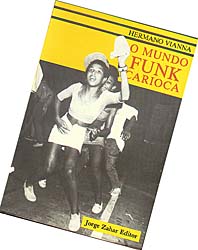
In my wanderings around Rio, rolling up to bailes, meeting DJs and MCs, and bartering for pirated CDs, I've amassed quite a bit of tunes. Rather than try to do a "definitive" take on funk, whose inner-workings, trends, ebbs, and flows are still kind of a mystery, I put together a mix of an hour's worth of favorites, roughly divided into funk antigo (old-school) that rides looped Miami bass beats, bangers on the tamborzão (the beat underneath most funk since the late '90s), and a new crop of "pós-baile funk" (post-baile funk), a term coined by Hermano Vianna. Vianna is an anthropologist and music journalist whose book O Mundo Funk Carioca (The Rio Funk World) was the first book-length study of funk waaaaay back in 1988. Granted, it was ahead of its time, but academics (like myself, I must admit) taking their ever-critical eyes to this stuff is going on its 20th anniversary. I don't think I'm in a position to offer any conclusive observations, but it's worth presenting in less sensational terms. Sure, it's wrapped up in the city's complicated and tragic socio-economic-narcotic disparities, and provides an intriguing window into Rio's social relations. But funk has also taken off as national pop music, the tamborzão beat even used for advertising jingles. It's a vast, vast world.

So instead of trying to represent, or re-present, here's my seleção. Selection, literally, but with a more important meaning in Brasil. The seleção is also the national team in a given sport, the proper noun "A Seleção" almost always referring to the national futébol squad. These aren't just any old tracks, but some of my favorites, whether it be for beats, lyrics, samples, community, or an MC or DJ I'm fond of.

As for gringo, that's simple. Rio is a city bringing in millions of tourists a year from the northern hemisphere, and they're all expected to plop down on Copacabana beach and drink caipirinhas. The last place any carioca expects to find gringos is hanging out at bailes funk or, as was the case this summer, actually living in a favela. It's not a term of hostility, just a fact. It's no use trying to act Brazilian, I'll always be the gringo, no matter the circumstances.

Pronto? Vamos.

1. Beto da Caixa Intro / Praia do Leblon


Couldn't resist a few exclusive vocal drops. "Blogaritmos número vinte e oito, é a seleção do gringo, tá ligado? (Blogariddims number twenty-eight, it's the gringo's selection, you understand?)"

c/o Beto da Caixa, one of the MCs I spent the most time with this summer. We hooked up some (digital) dubs for the Liberation Sound System.


And with the generous use of studio time by our main man Sandrinho DJ, who makes an appearance in the mix later on.


Then the soothing sounds of the Atlantic along Leblon beach, a guy hawking cold drinks on a hot Sunday. Everyone congregates here, in theory the beach serves as the city's great democratic space (although that's come under question in recent years). It puts you in the right mood for what comes next.


Part 1: Funk Antigo

2. MCs Júnior e Leonardo - Endereço dos Bailes

Easily my favorite old-school funk hit, "Endereço dos Bailes" (Address of the Bailes) is simple but eloquent.

"No Rio tem mulata e futebol, Cerveja, chopp gelado, muita praia e muito sol, é... Tem muito samba, Fla-Flu no Maracanã, Mas também tem muito funk rolando até de manhã

In Rio there are mulatta chicks [this is a good thing] and soccer
Brews, cold beer, lots of beach and lots of sun
It has lots of samba, Fla-Flu [soccer rivalry] at Maracanã Stadium
But it also has lots of funk rolling through the morning."

After listing all of Rio's tourist attributes, they cinch the quatrain in the fourth line, asserting that funk deserves its place in the city's cultural pantheon. And even at this stage around 1993, they were obviously right, as they go on to rattle off a whole list of bailes that were kicking at the time. Some, like the Clube de Emoções in Rocinha, is still there:


MC Dollares holding it down while the crowd works it out on the dance floor.

The version of this song I got on relatively high-quality mp3 ripped from the Sou Funk EP, which I later discovered was 100% pirated, a pretty rough culture-vulture case. Fortunately, Flamin Hotz Records turned out not to be such bad guys, and I helped them track down which artists we could and pay them back. Júnior and Leonardo were one of them.


Reppin' Sou Funk with Rocinha in the background. In a huge coincidence, the house where they grew up (and where Júnior still lives) backs up to the Instituto Dois Irmãos, where I volunteered these last two summers.

3. MC Mascote - Rocinha e Vidigal

Staying in the Zona Sul (South Side), just behind Leblon Beach is Vidigal, something like a little brother to Rocinha (Rio's largest favela).


The unfortunate juxtaposition of a 5-star Sheraton just below it on the beachfront besides (how guests can sip cocktails and play tennis with this behind them I will never understand), Vidigal is home to the amazing NGO Nós do Morro (Us from the Hill), who interestingly enough trained many of the actors in City of God, which made favelas something of world famous.

MC Mascote, who lives in Rocinha now to my knowledge (although he says he lives in Vidigal in the song), keeps the friendly spirit alive with "Rocinha e Vidigal." With a short "Push It" sample he explains in the chorus, "Quem dança no Vidigal dança na Roça também (Whoever dances in Vidigal dances in Rocinha too)." Kind words for both too: Vidigal is a "morro de valor (worthwhile hill)" and Rocinha "uma comunidade linda, a maior favela da América Latin (a lovely community, the biggest favela in Latin America)." Both of these first two songs are really earnest takes on being proud of your neighborhood, and of course of their blazing bailes funk.

4. Unknown - Morro do Cantagalo Proibidão

Of course, not all songs holding it down for the 'hood are so upbeat. Proibidão (extremely prohibited) is the style of funk that's really raised eyebrows–the songs that big ups the local criminal faction (which is usually paying for the baile anyway), incite them to go to war with one another, and memorialize dead gangsters. Even if you can't understand the lyrics (which mostly talk about the righteousness of the Comando Vermelho, who run the favela of Cantagalo), the gunshots punctuating the track are hard to miss.

No surprise, then, that Paul Sneed, founder of the i2i and a prof at UKansas, would title his study of proibidao "Machine Gun Voices." He makes a brilliant case for the proibidão MC not as another part of the criminal apparatus, but a crucial link between the community and the gangs, speaking from to another in really the only public forum the favelas have. The Comando Vermelho doesn't give press conferences (although I believe they actually did once upon a time). "Rap is CNN for black people," says Chuck D. "Funk is TV Globo for favelados," this anonymous MC might say. It's notoriously hard to find artist names for proibidão by the way, since having your name associated with this stuff can get you in trouble with the authorities (or rival factions, for that matter).


Cantagalo is also the baile da comunidade (free favela party thrown by the local faction) I've visited most, presided over by Rio's finest DJ, Sany Pitbull.


5. Júnior e Leonardo - Rap das Armas

"O meu Brasil é um país tropical
A terra do funk, a terra do carnaval
O meu Rio de Janeiro é um cartão postal
Mas eu vou falar de um problem nacional

My Brasil is a tropical country
The land of funk, the land of Carnival
My Rio de Janeiro is a postcard
But I'm going to speak about a national problem."

I wanted to end the old-school tunes on a peaceful note. Back to my boys Júnior and Leonardo, who had a massively popular hit with "Rap das Armas." They run down a list of heavy weaponry because the difference between an Uzi and an AK-47 is a part of their daily lives.


Here's a recording of them on TV . . . this track was a huge, huge hit. Which made it all the more surprising to hear that later in the '90s, they were so hurting for cash that they had a taxi and drove it in 12-hour shifts each, keeping it on the road 24/7. One hit does not equal success for life. They're on a resurgence, though, planning to tour Europe as part of the release Tropa da Elite, which features "Rap das Armas."
__

That brings the old school section to an end. Tamborzão bangers coming soon.

Labels: , , ,