Beat Diaspora: Beats, Buses, Bricks

an omnivorous take on music of the beat-based variety and the urban spaces that nurture it

Friday, November 28, 2008

Tropa de Cultura


Even if it's old news in Brazil, I'm due to provide a refresher on Tropa de Elite (Elite Squad in English). It was directed by José Padilha as the second film in a trio that began with Bus 174, the documentary of a hostage taking on a Rio bus that was captured by national TV to disastrous results. His cinematic vision is to tackle the city's central pressing issues -- violent crime, the drug trade, police corruption and brutality. In Tropa de Elite, he focuses on the BOPE, Rio's equivalent of a SWAT team, that conducts intense operations in favelas -- usually with callous disregard for human life. Shoot first, ask questions later, as it were. Their ostentatiously violent symbol makes that abundantly clear ("It looks like a biker gang in the third reich.")

I first watched it in Rocinha with some 2Bros folks, where the scene portraying BOPE invasions of the favela were eerily similar to real life. We had a pirated copy that had leaked in August 2007, just a week or two before my departure. It had already spread like wildfire, and by the time of its official release in October, it was seen by a reported 11.5 million Brazilians. Not much the copyright police can do about that.

Most interestingly, it was equally popular among all strata of society, but for opposite reasons. Favelados were on the side of the victimized favelados as well as cavalier gangsters, and a friend of a friend was proud to have been an extra as a bandido. The middle and upper classes were taken by protagonist Capitão Nascimento, whose strongarm, torture tactics elicited applause in movie houses.

In a country whose moneyed interests frequently feel that the drug trade can only be reined in by extra-legal measures, Nascimento's take no prisoners attitude made him, as this magazine cover argues, a new national hero.

Padilha cannily rejects any claims that his film endorses either side of the debate. I saw him speak at the Harvard Film Archive last spring, where he maintained the position that the film was a portrayal designed to spark dialogue, not a polemic. In short, he's let the film be a mirror on its viewers' own prejudices and opinions about the power relations in Rio.

I don't think a strong-willed director tackling such challenging subjects should get off so easily. Surely there was some authorial intent. For one, the group that comes off the most negatively in the film are the wealthy college students who patronize the drug trade -- they provide the funds that keep the whole operation going, much to the detriment of folks who live just a few miles away up in the hills (on a longer scale, Colombia is taking the anti-cocaine message to middle-class Europeans).

Those folks, meanwhile, get their fair due of fun for a brief moment at the beginning of the film, with a stellar baile funk scene that tragically ends in a police-gang shootout. It's chopped up by the opening credits, as you can see in this trailer, but the shots come the closest I've seen on screen to a baile funk, or at least one c. 1997.


I say 1997 because that's the setting of the film, not too long after Rocinha brothers Júnior and Leonardo popularized one of the classics of funk carioca, "Rap das Armas," which they sing live in this opening scene. I documented a recent acapella usage and linktubed to a Yo! MTV Raps-esque version during my Rocinha sojourn. The popularity of "Rap das Armas" as the theme song to the film was a real turn of fortunes for Júnior and Leonardo, who I met around the same time in August 2007 just as they were preparing to tour Europe in advance of the film's release there. After skyrocketing to fame in the early '90s, they became increasingly impoverished until they were reduced to driving a taxi cab on 12-hour shifts each, so the car was constantly in rotation. Now they're back in the driver's seat, so to speak, as funk MCs.


This version is from the official Tropa de Elite soundtrack, which amazingly is on sale stateside, as is the DVD. It cycled around some film festivals in the U.S. this year, but I never saw it make much of a splash in wide release. I was convinced it would become the next City of God, a lush but violent film about Rio, set to further fix foreigners' minds that the city is a violent nightmare. I guess I was wrong. But if you don't want to shell out for the official copy, you can see it for yourself with English subtitles.

With such broad appeal, meanwhile, it was only a matter of time before edits/dubs/remixes trickled out of the Brazilian webosphere. In fact, to permit a cross-linguistic pun -- Tropa became a trope, its catch phrases and music trotted out in all manner of remix culture fashion. Below is a sampling of the samples --


  • Capitão Nascimento viciously berates his wife as his battles in the field increasingly rattle him. He created a new slang term, "Quem manda nessa porra sou eu" (I'm the one who controls this shit), that caught on rapidly, enough to become remixed as a funk track.


  • Brazilian humor site Kibe Loco has some video remixes cobbling together scenes from the film with tamborzão, crunchy guitar (and in the first, the riff from "Seven Nation Army"), and popular lines from the movie. The stutter-start chopped scenes actually recreate the funk vocal sampling technique with some accuracy.


Labels: , , , , , , , , , ,

Sunday, November 23, 2008

Mnml do Morro


Brasil still on my mind -- stripped down & sped up.

First, there was some percussive ferocity lingering in my inbox, c/o Daniel D'Errico. He plays in Boston's BatukAxé, a drum group led by Bahian Marcus Santos. Up above, they're playing at the "Welcoming New Bostonians" event, holding it down for the constant stream of Brazucas coming to the Bean. (Daniel is the odd one out in the yellow shirt.)

BatukAxé (Marcus Santos' Bateria) by gregzinho

Then wayne&wax tipped me off to Discobelle's most recent Mixin' It Up by DJ Downtown of Helsinki (what is it with the Finns?! tropical living vicariously through funk carioca?) The opening track is a stripped down version of "Rap das Armas", the ever controversial and ever misinterpreted telling-it-like-it-is funk track. This version sounds like the one re-recorded for Tropa de Elite, which I shamefully never blogged about, although you can read up on all the fuss from last year over at the now defunct BOPE Blog.

Labels: , , , , , ,

Saturday, November 22, 2008

Baile Rave


If it's not one of us, it's another. Following in the fine Finnish tradition of his countryman DJ Rideon, there's another funk carioca blogger (and 2Bros volunteer!) on the loose in Teemuk of Otra Luna, which focuses on "art, design, music and culture from the southern side of the world." His "super classics of funk carioca" series has dug deep this month, with big features on William e Duda and Deize Tigrona.

The latter has apparently gone mundial, collaborating with Lisbon's DJ Manaia for some cross-lusophone batidas.


"Eu sou sobrevivente de uma rave." (I'm the survivor of a rave.)

A tried-n-true funk MC singing over the raviest of rave synths can only make me laugh as I recall Sany DJ's complaint that his pós-baile funk is derided as "rave" at bailes funk.

What I don't understand about this track is why the vocals are so poorly recorded. They sound worse, in fact, than her smash hit "Injeção" (with a dance routine no less -- happy, Lone Wolf?) The raw sound of funk is constantly praised as one of its most endearing features, although that's really a canard w/r/t funk of the last decade or so, with the big commercial sound systems using top notch recording studios. Did DJ Manaia intentionally rough up the vocal mix to make it sound grittier, more like funk to his Portuguese or wider Euro audience? Either way, it just plain sounds bad against those hyper-polished synths. Maybe Deize is simply hoping her vocals survive this rave.

Labels: , , ,

Monday, November 17, 2008

Returns

O Cabidão caught an overnight flight to Rio on Saturday, rather gladly saying farewell to the U.S. and returning to "a minha terra, o meu Brasil!" Too cold, volume too low, clubs too small (and my basement not the nicest place to live either, granted). After three weeks as the ad-hoc tour manager of the first non-Marlboro DJ to play for American audiences, I now have a more realistic perspective on the viability of bridging the divide between global ghettotechnicians and their northern fans, at least in the case of funk carioca, really completing the circle from wide-eyed onlooker to direct intervener.

I don't want to declare the tour a failure. There were plenty of highlights: Global Frequency, MoFo Radio, Invasores do Baixo, Mudd Up!, TTL in-store, Batida do Funk. And the tour really brought out the best of some fine folks like wayne&wax, Lone Wolf, DJ Ghostdad, and DJ Comrade, all of whom put their time/money/effort/talent into collaborating. Kosta of Bananas even used his west coast contacts to score a show in Seattle on three days notice.

Still, a tour remains an economic proposition, and one that fell fairly flat. It seems that playing the Brazuca circuit (Hyannis, Newark, Bridgeport, Boston, etc.) pays for the plane ticket and is a prerequisite to being able to afford other shows for the knowing gringos. Unfortunately, this means Brazuca crowds will also be driving who gets brought up. Most are not carioca, but from other, poorer states in Brazil, and get their funkeiro fandom from the web, where heartthrobs like Mulher Melancia (the Watermelon Lady) are the top draw. Cabide, in fact, was a relative unknown, so he didn't bring out the Brazilians en masse in New England.

While this tour was a half-and-half proposition, in the future I expect funk DJs and MCs to mostly play for the brasileiros and then, if possible, an interested party like myself, the Boston Bouncers, Xão Productions, or Masala (who had expressed interest, but we had some visa issues) will cobble something together.

The "Batida do Funk" party by Xão at S.O.B.'s was, admittedly, my favorite of the tour. To trot out an old cliche, in the melting pot of New York we were able to find the mixture of gringos in the know, global music aficionados, and plain old Brazilians to make the show a real crossover audience. The addition of Brazilian dancers and a baile funk slideshow by Vincent Rosenblatt of Agência Olhares made for an odd refraction.


Dancers juxtaposed with the image of dancers. A baile funk americano (Cabide repeatedly referred to shows as "bailes") juxtaposed with a baile funk carioca. We were both interviewed for the upcoming film Beyond Ipanema, about Brazilian music in the U.S., whose directors were in the audience. I was unable to tell who was Brazilian and who was American. It's difficult math when a club that serves $10 caipirinhas can't pay the DJ as much as a favela in Rio can, but that's the strange inversion for you. Who mediates, who performs, who speaks (Cabide was mute without English and I was left to translate for film, radio, conversation). He opened for Diplo on the penultimate show of the Mad Decent tour, playing the first set even before some indie band from Brooklyn came on. The headliner later worked in a tamborzão, but he was temporally separated as much as possible from the real performer. Worried about being upstaged the next night, cutting the volume, sucking the life out of the music. Metaphor and fact. Who controls and who performs. The tours are over, but the film will linger.

Labels: , , , , , , ,

Sunday, October 19, 2008

Cabide DJ Landing Stateside


Pancadão do Morro was just the first step in establishing better international connections between funkeiros brasileiros and americanos. Now, we've got one of the best DJs from the record on U.S. tour. Funk originator Cabide DJ, who I blogged about way back in '06, touched down the day before yesterday and made it through customs & immigration with no problems (graças a deus).

Cabide is not the first DJ or MC from Rio to come up. In fact, the Brazilian expat organizing the tour had MC Biju (who did "Aviãozinho," which appears on Favela on Blast) and Mulher Melancia (an ex-dancer of MC Créu who launched her own career on the strength of a bestselling Playboy Brazil appearance) playing shows here just last month. The catch is that they only play for the Brazilian immigrant community, covering the east coast Brazuca circuit of Boston, Framingham, Hyannis, Danbury, Bridgeport, and Newark.

Fortunately, I got wind of this tour ahead of time, and I'm proud to announce that the forbidding world of international travel worked out and for the first time -- excluding DJ Marlboro, who has always been in a league of his own anyway -- a funk artist is going to perform for crossover crowds, and ideally beginning to bridge that gap between global ghettotechnicians and their not-so-ghettoized fans in the global norte.


There's the man at work in Rio. Now let's see what he an do to the East Coast, where he already played Club Lido in Revere on Friday night, Made in Brazil in Queens last night, and Tuxedo Junction in Danbury, CT tonight. Check XLR8R for a tour-opening boost as well as an mp3 exclusivo.

He follows with Global Frequencies on WMBR this Tuesday, Mofo Radio on Wednesday at WZBC, and then an Invasores do Baixo massive on Thursday with an excellent cast of local characters.


Full tour schedule below, but I'll be making regular updates with flyers for the shows that I organized.

10/17 Boston, MA - Club Lido
10/18 Queens, NY - Made in Brazil
10/19 Danbury, CT - Tuxedo Junction
10/23 Boston, MA - "Bass Invaders" at Milky Way w/ DJ Ghostdad, Nick Yoder, DJ Gregzinho, Philomena, wayne&wax, DJ Flack
10/25 Hyannis, MA - Pufferbellies
10/26 Boston, MA - Taboo
10/30 Philadelphia, PA - Medusa w/ DJ Gregzinho, Chip and Becky Soundsystem
11/03 Philadelphia, PA - "Jang House" at The Barbary
11/06 Baltimore, MD - "Bananas" at Bedrock w/ Donkey Bits
11/08 New York, NY - "Batida do Funk" at S.O.B.'s w/ DJ Comrade, MC Zuzuka Poderosa, Supervixen
11/13 Baltimore, MD - Sonar w/Diplo, Boy 8-Bit, Blaqstarr

Labels: , , , , , ,

Wednesday, August 29, 2007

Brasil: Um País de Todos?


This clever multiculturalist logo sneaks into the corner of just about every sign announcing federal support for a project. That the federal government would even need to make a public declaration of Brazil as a country for all is an indication of doubts that such a claim is really true. The longstanding belief that Brazil is a racial democracy has come under fire in recent years, as in the stratification of wealth that curiously corresponds to racial lines.

Still, I dropped by a few museums in São Paulo that, to their credit, were much more hospitable to the idea of a harmoniously multicultural Brazil.

First was the Museu da Lingua Portuguesa, a fairly new museum situated in the rafters of the belle époque Estação de Luz train station. Very high-tech and interactive, it purported to trace the history of the (Brazilian) Portuguese language while illustrating its various influences over the centuries. The time line history was particularly interesting, addressing developments in African language–especially Bantu–and American indigenous culture/language parallel with the development of Portuguese from Latin.
Thus, for example, such interesting cross-currents as Arabic affecting both Portuguese and African languages at the same time:

Or other tidbits, like cachaça, the national liquor, having Bantu origins:


Then, at 1500, they all converge:


The Portuguese meet the Tupi (Brazil's largest indigenous tribe and the one that left the largest mark on Brazilian cultural), African slaves are brought over, and the feijoada of languages stews for the next 500 years.


Unfortunately, little to no mention of what kind of linguistic repression occurred, what kind of penalty might be meted out for speaking your native language as a slave. There is a flash forward to a historically corrective present, though.


"In 1988, the Brazilian Constitution guaranteed to the Indians and the rural communities descended from slaves (remnants of quilombos [maroon communities of runaway slaves]) the right to the lands they have been occupying. It guaranteed as well legal protection to indigenous beliefs, languages, and
traditions.

The estimates of the time cited the existence of 220 indigenous tribes and around a thousand communities that were remnants of quilombos. The prolonged isolation of the majority of these peoples permitted the survival of more than 180 different indigenous languages and, in the black communities, the permanency of a Portuguese full of archaisms, in addition to African inheritances from the times of the senzalas [slave quarters on a plantaiton] and quilombos."
Language of African descent, or at least one word in particular, also caught the ear of Gilberto Gil and Caetano Veloso, whose lyrics for tropicália classic "Batmacumba" (macumba = candomblé ritual offering) are designed as a recitation in poema concreta style:

Gilberto Gil & Caetano Veloso - Batmacumba
___


Further on the east side of town, I also stopped by the Hospedaria de Imigrantes, or Immigrants' Hostel, which has been beautifully restored and turned into a museum & archive (for those looking for info about their family). It was more or less the Ellis Island of São Paulo. It's where hundreds of thousands of immigrants spent there first few weeks in Sampa before being assigned work on a coffee plantation somewhere in the interior.


Studying this period of Brazil's history was what first gave me the notion that Brazil and the U.S. have much more in common that either might originally think. Similar size, remarkable geographical diversity, history of plantation slavery. And neither is afraid of making really cheap ethnic stereotypes in a seemingly innocuous exhibit. I'm sure most Japanese women wore ceremonial kimono on their trip over to Brazil . . .


Labels: , , , ,

Tuesday, April 03, 2007

Outernational Geotronix


Magazine cover specialists and Geo Bee sponsors, now world music mavens. World music, of course, being a tricky one to properly pin down. But I see more X-Plastaz and less Graceland, plus a digital distribution scheme that will hopefully keep it off the Starbucks shelves. With a pop-up Java app and $0.99 downloads, it's got an iTunes-esque death-to-the-music-industry imprimateur all over it.

I wonder, though, if the remix treatment to every song shines off too much tarnish when the result is "a super smooth house track" (DJ Afro's edit of Los Amigos Invisibles "Yo No Se"). Although there probably wasn't much tarnish to begin with if the album it came off of was produced by Dmitri From Paris. I've got nothing against French house -- why on earth would I have gone clubbing in Paris last fall otherwise? -- but such slinky sounds don't settle well alongside the righteous chicano indignation of "El Ballad de Jose Campos".

"World music" coming up short again as an empty category when it's overwhelmingly vast? Could be. Or maybe just misnomered: what's "worldly" (as opposed to "national", I suppose) about Spanish-language music when reggaeton dominates the airwaves?

An attempt, but I'm unconvinced a successful one, at imploding the top-down*/bottom-up** paradigm in "world music" circulation that professor wayne&wax told me he toyed with in class.

*i.e. Graceland and PG
**i.e. this, this, this, and maybe even yours truly.

Labels: , ,

Sunday, December 17, 2006

Bo knows / Cabide after the jump


Catching up on some long-neglected RSS feeds and came across an insightful Maga Bo post. He uses mp3, YouTube, and his own observations on the Volt Mix to Tamborzão progression of rhythms (or more accurately riddims, given how they freely they float around) in funk.

Tamborzão Mix 2005

From Batidas Instrumentais Ineditas Vol. 5, a compilation of instrumentals for aspiring funk producers, that I copped at the Uruguiana market in Rio. The tamborzão (tambor = drum, ão = intesifer, so "big drum") will sound immediately familiar to anyone who's heard a fairly recent funk track. As Bo points out, "It's a big dry sound that works really well on a massive sound system in a mostly open air space. It's a mix that has lots of room for vocals and other elements. I would say it's as big and ubiquitous as sleng teng was in its heyday." As of summer 2006, DJs would ride the tamborzão beat through a whole set for easy mixing, and there certainly wasn't a lack of tracks to choose from if one stuck to it.

My man Cabide DJ (his site's down at the moment, but I'll tell him to fix it), who I interviewed over the summer, told me the the tamborzão was invented by Luciano DJ on a Roland-808. But as I've mentioned briefly, the dominant beat used to come from Miami bass, natch.

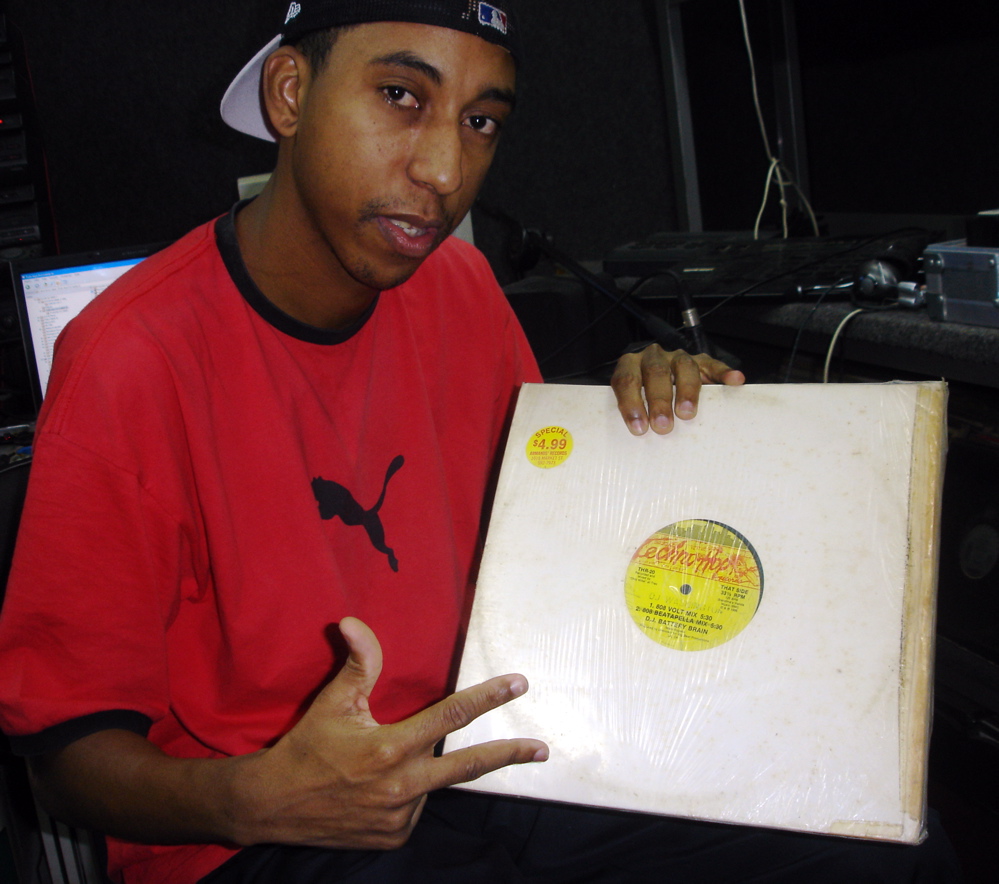
Cabide with record in hand.

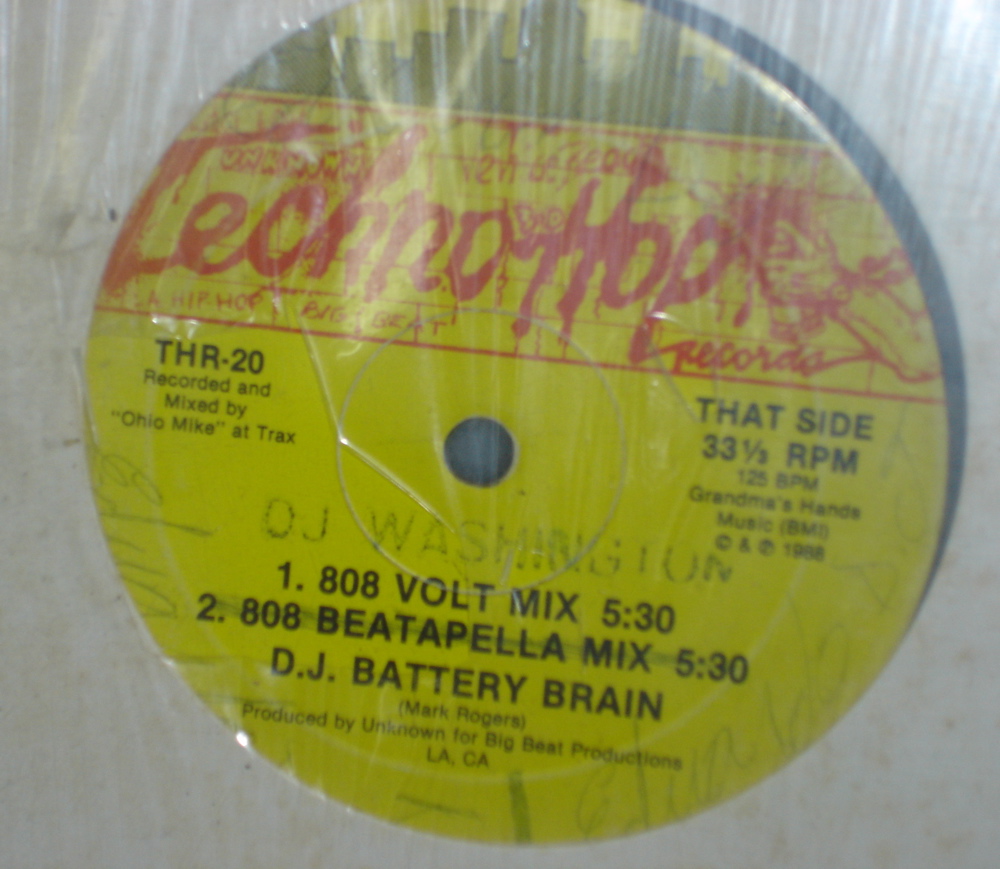
Zoom-in to the goods: 808 Volt Mix, DJ Battery Brain


What's that in the corner? Something to make the Philly heads flip. $4.99 went a long way. Too bad they're closing up shop.

___

Sany DJ holds up his copy in the YouTube vid (sorry, português only), but just to show that other old-school DJs had their hands on it too. Cabide said a friend picked it up for him in Miami. Miami --> Philly --> Miami --> Rio --> Philly over 18 years. Not a bad run.

The tamborzão mini-doc is also a hot demonstration of the live MPC DJ style that I found very prevalent in Rio. More from Cabide. First, as he says, "This here was the first sound used on a sampler in Rio, by MC G, with the Volt Mix beat."


Now some of his more contemporary stuff with a tamborzão flavor:


Cabide also claims to be the first DJ in Rio to use the Rocky Theme. He told me he bought a CD put out by O Globo (media corp) called "Sons do Cinéma" (Cinema Sounds). I tried to explain to him how the Rocky Theme has become synonymous with funk to Americans and Europeans, although getting into a detailed explanation of M.I.A. and pop stardom didn't really translate well. He was pleased that it had some popularity, suffice to say.

Something else dovetails nicely with all this discussion of rhythms and origins. I asked him how Rio DJs discovered Miami bass -- did folks go to Miami because they had heard about it, or when expat cariocas returned from abroad it came with them? He was stumped and called his friend MC Paul. While Paul didn't answer my more specific question, he sidestepped it to a broader point [audio in portuguese, translated & edited for clarity below]:

MC Paul on the origins of funk

"The beat of funk evolved in Africa. Africans began the beat, the drum beat, boom boom. Os americanos [in Portuguese, americanos refers to both North and South Americans collectively] brought this beat over and people made funk out of it. James Brown, hip-hop singers, they use the map of Africa because the beat comes from there, understand?"
That puts it in a much deeper perspective -- you can call anything from James Brown to 2 Live Crew "American" without being wrong, but you can likewise point to a historical arc that goes all the way back to Africa. It brought certain sounds to the USA and to Brasil, so it shouldn't be surprising that they link up and recombine themselves a few centuries down the road.

All in all, it was a productive interview -- who knew I'd stumble over the Rocky Theme originator? Cabide's a really nice guy and a testament to the friendliness of Rio's music scene: I had bought his CD at Uruguiana market, liked some of the tracks, and wanted to know more. There was a phone number listed on the back so I called him, explained what I was doing, and we set a date a few days later where I could come out to his studio and do an interview. He's 31 years old and has been DJing since 1987 -- he was adamant that Marlboro doesn't deserve credit as the sole originator of the Miami bass-tinged sound. Several DJs, himself included, were doing the same thing back in the late '80s.

I don't have a good excuse for having sat on all this for so long, but here are a few more pics from that day:

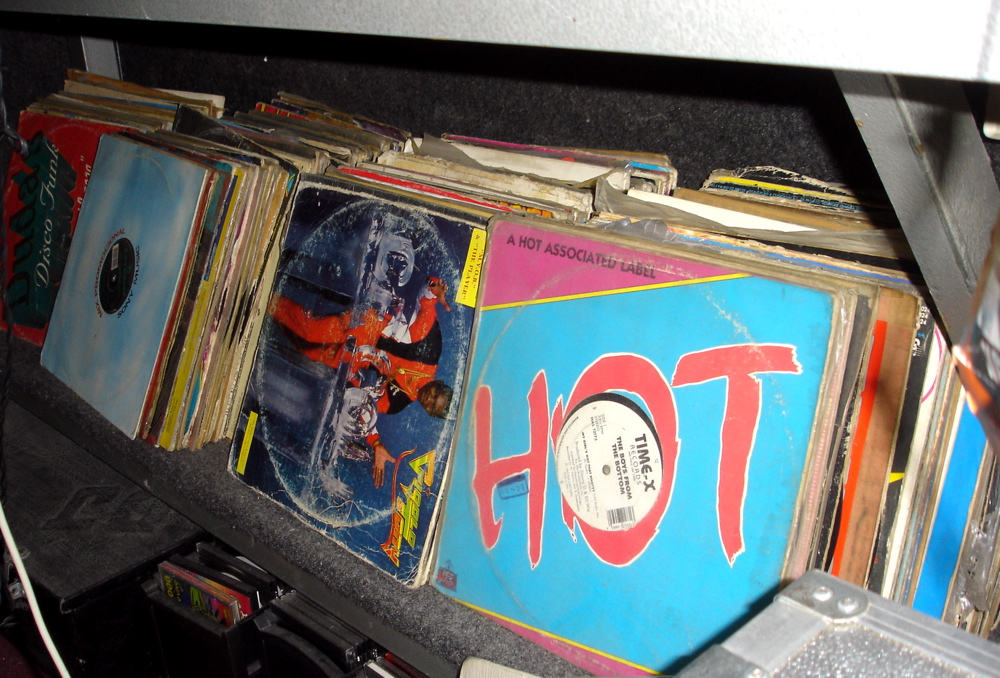
You know he's old school when he can crate dig.

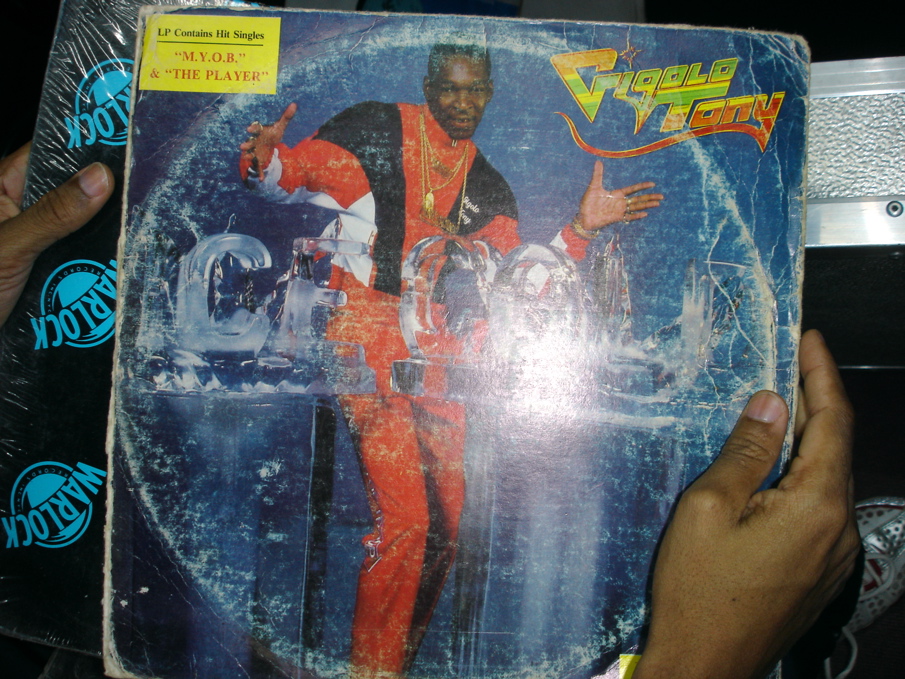
Another classic Miami bass artist who had a strong influence on funk.

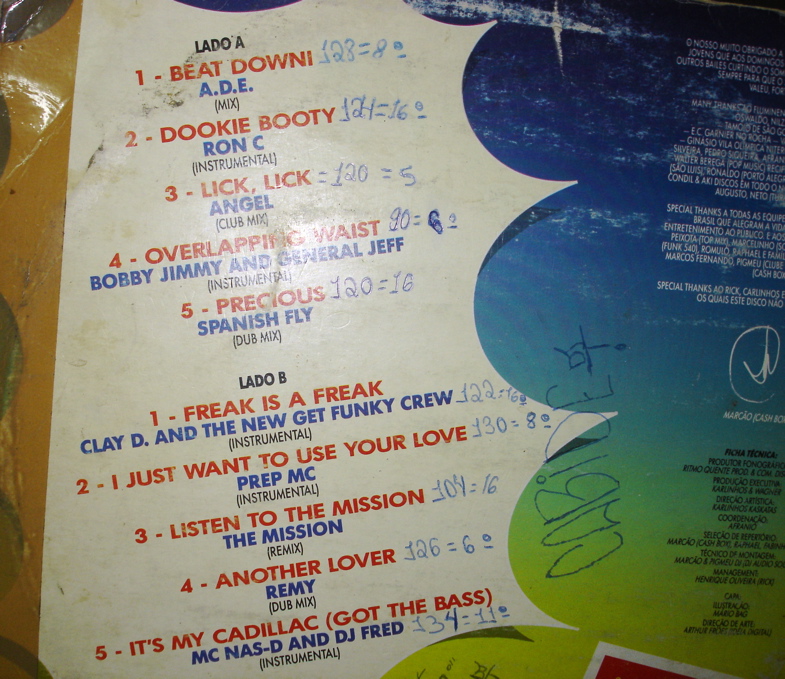
Cash Box was one of the earliest Rio soundsystems -- they even cut vinyl!

On the back: You can tell it's the pre-Portuguese vox days.

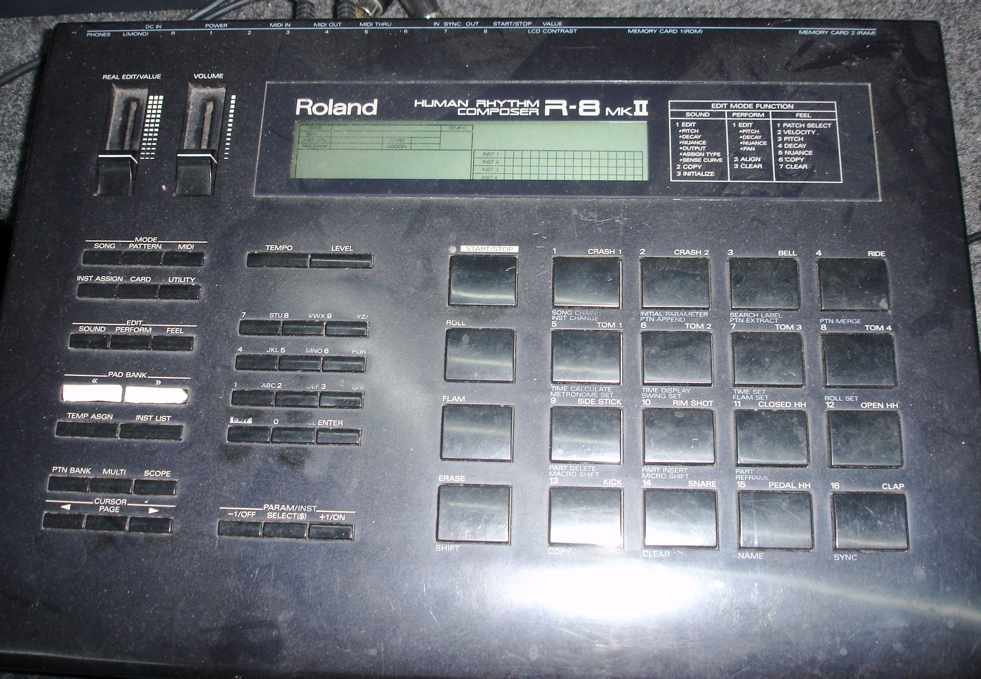
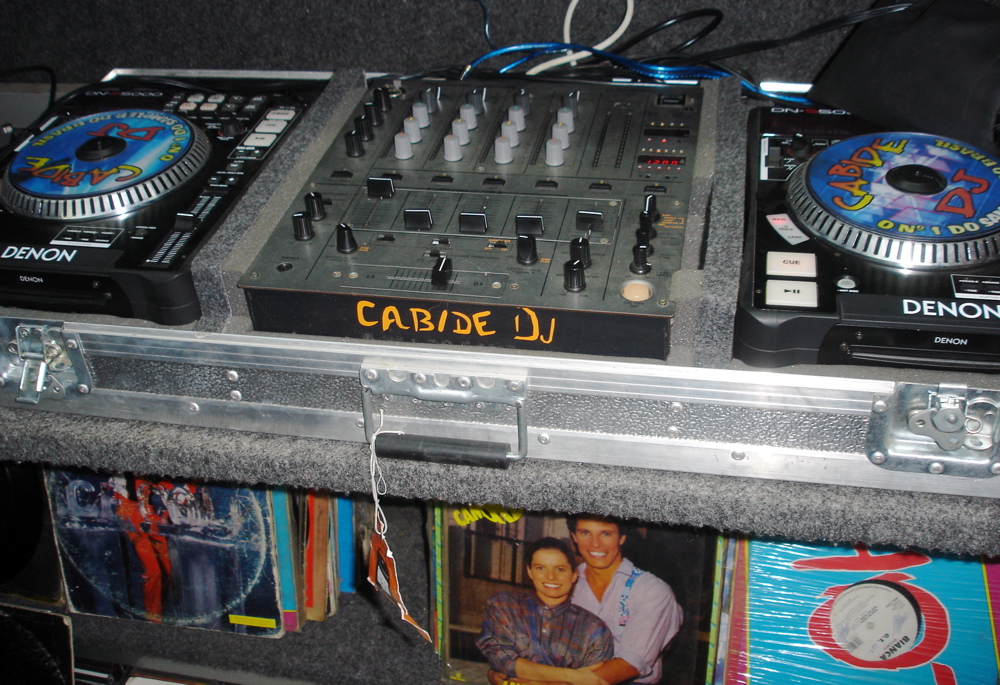
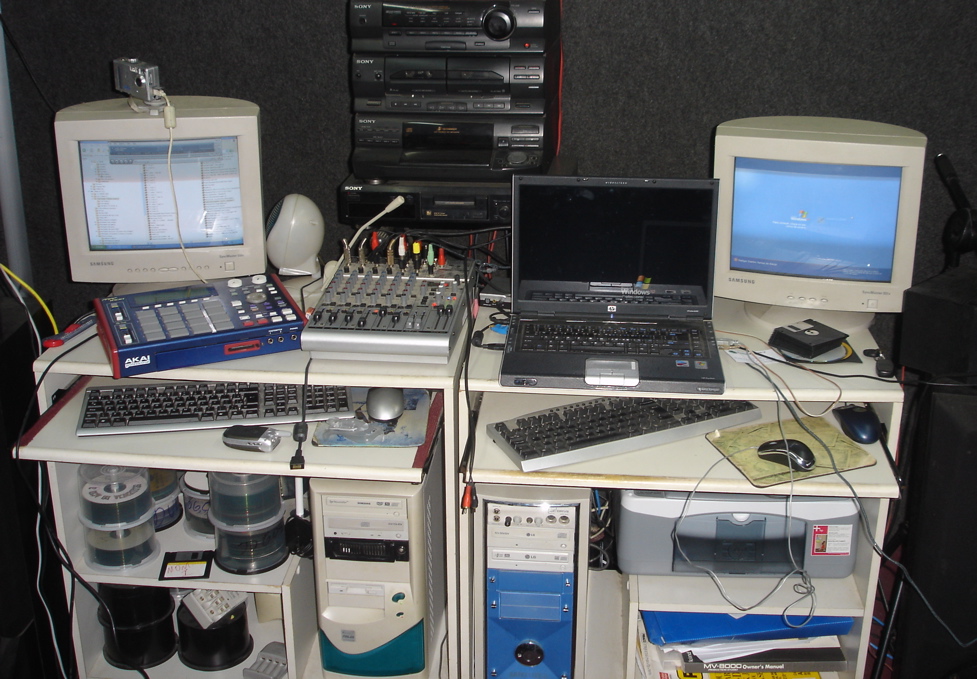
His studio was like an archaeology dig of music gear: from a Roland R-8 drum machine

to a Roland MC-50 sequencer

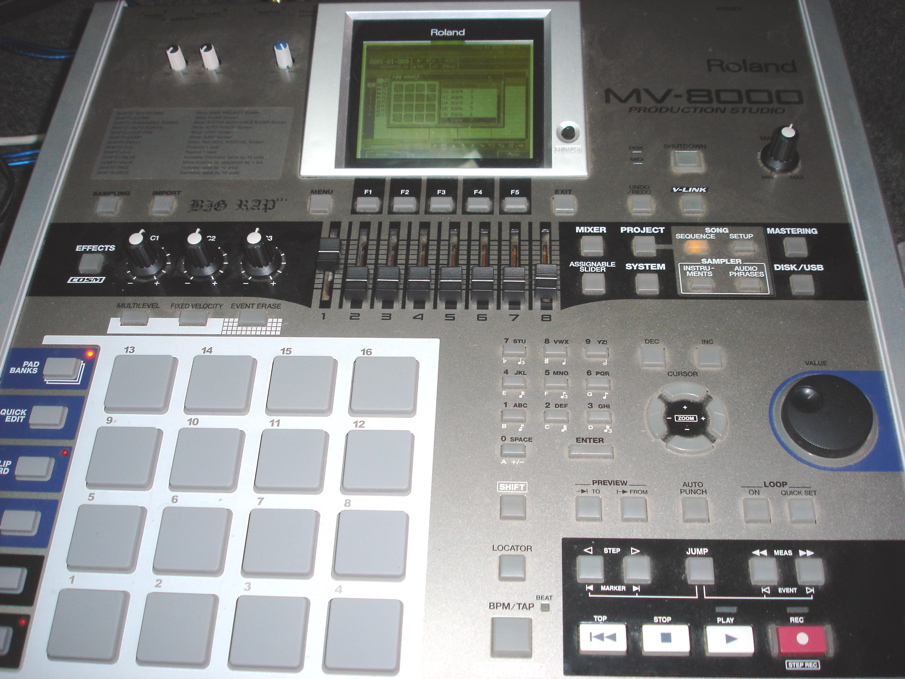
then moving to the present with his prized MV-8000 MPC

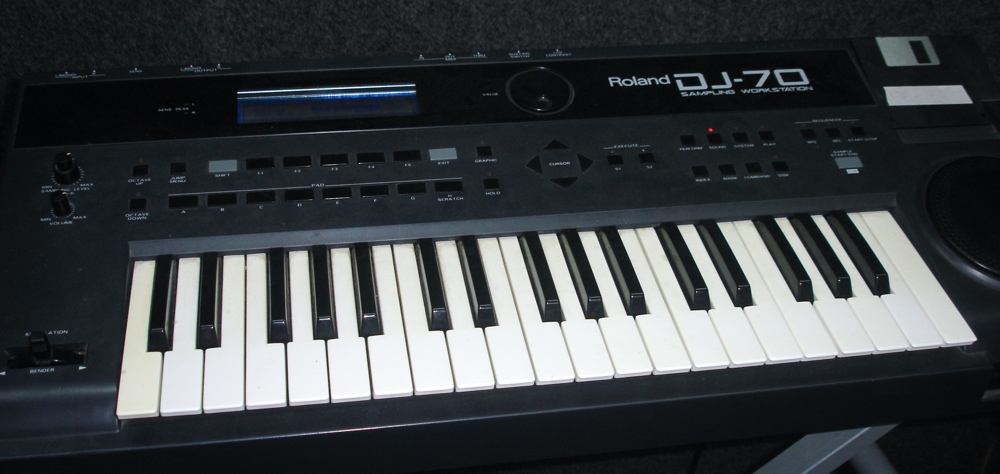
a less ancient keyboard

and his CD-J rig (he had turntables in a corner, if I recall).

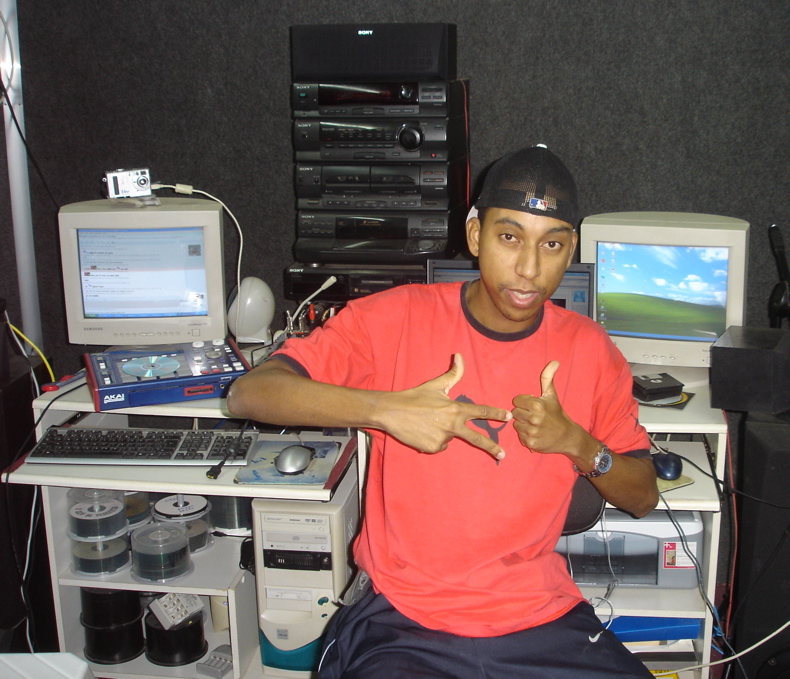
Plus of course the computer set-up

from which he ran Sony ACID.

All in a soundproofed room, I might add.

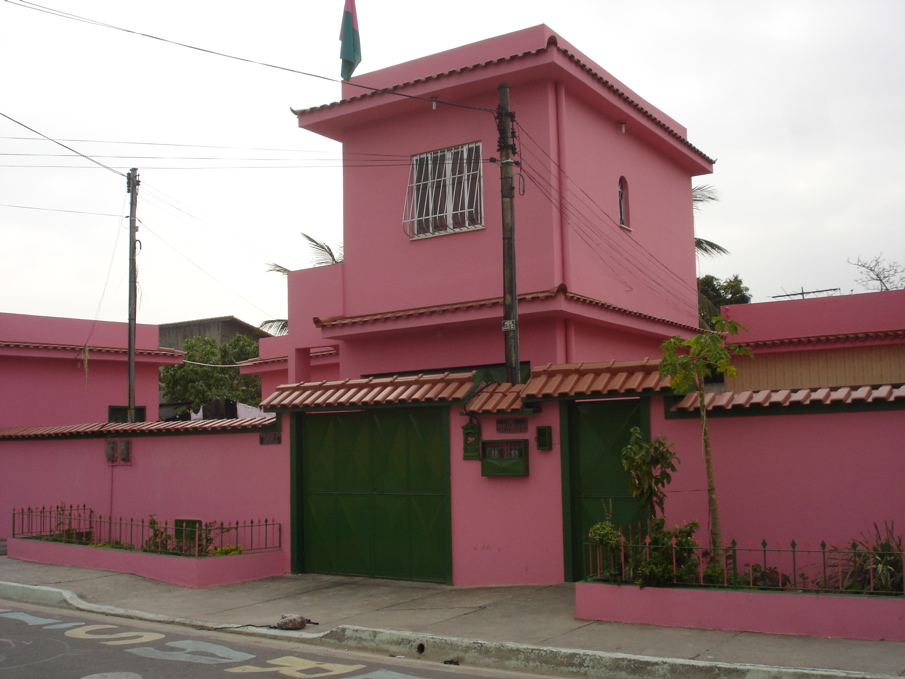
I thought the bright pink house was a nice touch -- it's actually a sort of complex with several houses surrounding a courtyard. There's space for that out in São Gonçalo, a suburb of Rio on the other side of the Baia de Guanabara (and over an enormous freaking bridge).

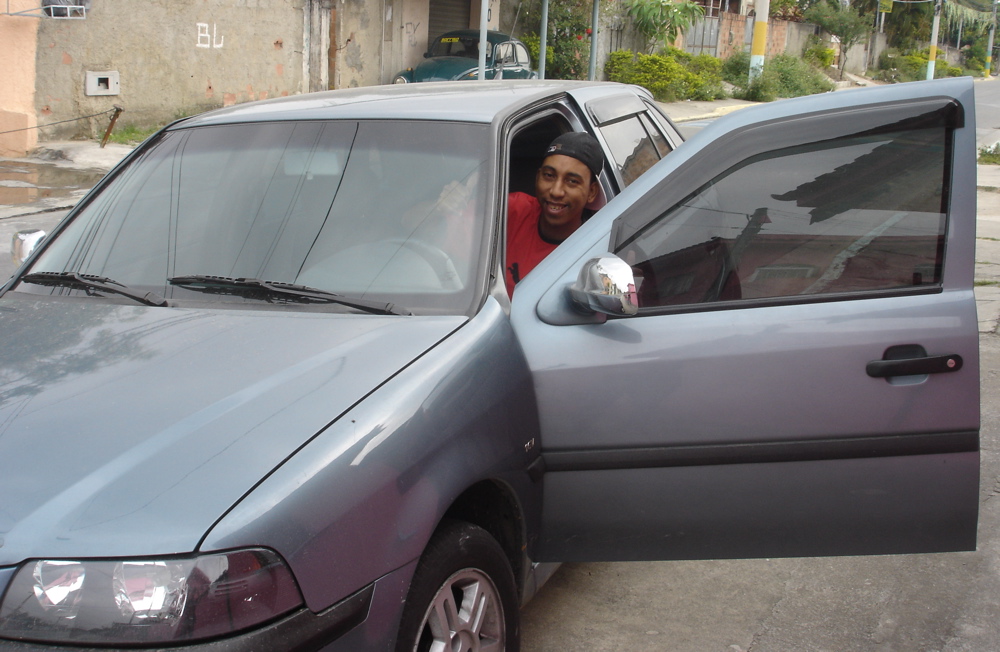
And last but not least the wheels: a VW that's prized only second to his DJ gear.

Labels: , , , , , ,

Saturday, October 07, 2006

The Bass Connection, Part 1

Wayne asked if I could post a list of which Miami bass tracks caught the ears of the funk faithful down in Rio.

I picked up two CDs of Miami bass at the pirate stands of Uruguiana market. Unfortunately I don't have them physically with me, so I can't scan you the covers. But here's the track list of the first:

Miami Beat Vol. 11

1. The Beat Club - Security (Remix)
2. N2Deep - Toss Up
3. Toddy Tee - Just Say No
4. Svemtyle - Weekend Tool
5. Renard With No Regard - How Hard Can You Throw It?
6. Beat Master Clay D & The Get Funky Crew - Move Your Body to the Beat

This is one is incomplete because some of the tracks didn't rip to mp3 -- and without the CD, I can't recall what the other tracks were (nor does Google turn up anything for "Miami Beat Vol. 11" or similar searches).

Of the 6 tracks I do have, there are two odd ones out: N2Deep and Toddy Tee are both early 90s Southern California rap groups, examples of the sound that became popularized by the likes of 2Pac and Dre (cf "California Love", et al.). That's not terribly surprising given that this is theoretically volume 11 of a compilation series -- the roster gets a bit then by that point, I imagine. Doubly unsurprising given that Miami and California comprise two-thirds of most Brazilians impression of America. New York City is the other terra cognita, with Texas/Washington forming a bizarre twin identity in people's minds on account of Bush. I suspect that'll pass after '08, however.

What we're left with, meanwhile, are some decidedly Miami tracks, if not always identifiable ones.

The Beat Club
have a verified Miami history, although the track in question, "Security (Remix)", comes off the A-side from an eponymous 12" released in 1990 after they moved to the UK. That would help explain why this version sounds more like straight dance music (the Discogs' bio notes that they hooked up with New Order's manager upon arrival). This track also presents a good example of the Miami-Rio borrowing, live and direct:

First, note the keyboard stab at 1:13-1:16:
The Beat Club - Security (Remix)

Compare to the opening of one of my favorite recent funk tracks:
Peko, Marcelinho, and MC Gil do Andaraí - Treme Terra

Moving on, Renard With No Regard and Beat Master Clay D offer two fairly textbook examples of both strains in the Miami music scene of that era. "How Hard Can You Throw It?" winds a single chorus and snappy drum machine hits & handclaps across a very skeletal structure -- just a pure, deep bass track -- while "Move Your Body to the Beat" works the more lush sound of freestyle.

Unfortunately, I can't identify the last track. "Svemtyle" and "Weekend Toll" have both turned up nothing in my searches, nor have the scattered lyrics. Hear for yourself and let me know if it rings any bells, but it's definitely squarely in the bass tradition, feeding in trademark snippets of "Planet Rock" and "Whoomp There It Is"-style bass.

Svemtyle - Weekend Toll

The identification issue is definitely a tough one. It took some digging to get tracks 5 & 6 named properly. From the CD I had them as the fairly incomprehensible "Ther - How Hard Can You" and "Tamber Raider - Crow Time", respectively. But a disregard for accurate attribution is nothing new, as the mess of my pirated funk CDs can easily attest to. It all reinforces an attitude pervasive in the funk scene that names and ownership of the recording are not as important as the live performance. Why, indeed, so many recordings I did get were simply from live performances.

Certainly a lot of this stems from simple economics. If you're among Rio's poor (as funk MCs often are), studio time is expensive. It's worth cutting a track semi-professionally so you have something to give DJs and are able to promote yourself among those who can pay you. Why bother recording for the purpose of a CD release when it's only going to be sold as a pirated copy?

And so, without the music-as-industry that we're used to in the States (take another look at Wayne's article again -- I just finished it today and it resonates quite a bit, the general trends he discusses as present in Jamaica are surely universal for popular music in developping countries), the emphasis is less on the objective (recording) and more on the subjective (performance). Everything, it seems, is wrapped up in the performance. Paul's thesis elaborates upon the socio-political aspects of the performance, my understanding of funk's economics all point to the performance as the main revenue source, and as a result (or because of?) all this, the music itself is generated more at the performance than anywhere else. That is to say, baile and funk are inseparable.

It's a double-edged sword, ultimately. The MC's life is not an easy one, as I witnessed. From the hustle of trying to get gigs, to the frenetic weekends of singing at multiple parties in the same night, to the impossibility of income from recordings, funk's flexibility is also its curse. From a theoretical standpoint, I think it's fascinating -- the openness, the fluidity, the subjectivity, the bricolage, the perfomativity -- but I can't forget the human element of it all. Paul ultimately demures from calling funk revolutionary, and looking at how it works in practice, I can only agree.

[booty bass rumblings into philosophical speculations part 2, coming soon. more tracks, better tagged, but also more predictable.]

Labels: , , , ,